Counterfeit Locksmiths: The Hidden Cost Of A Growing Industry Problem
Posted by Ryan Barbin, AKS on Oct 20th 2026
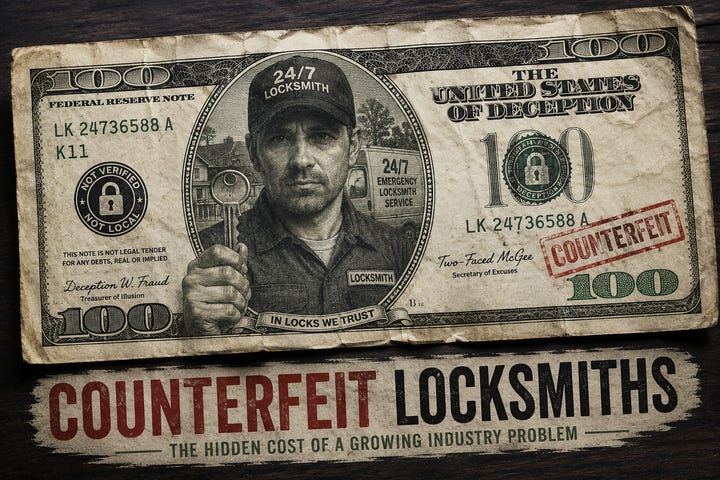
The most valuable tool a locksmith carries isn’t a key machine, programmer, or pick set.
It’s trust.
Many people can detect a counterfeit bill with a little examination. The color is off. The paper feels different. Specific features are missing. Simply hold it up to a light source or mark it with a pen, and the truth comes to the surface.
Counterfeit locksmiths however, they are a bit more difficult to spot. Typically the damage has already been done before anyone ever noticed. I mean… everything looks pretty legit—a website, phone number, reviews, logos, service vans, and more.
The average human being handles paper money about once every 3-4 days, and a single denomination typically changes hands about 110 times per year. Whereas, most people come in contact with cash quite often, they rarely come across a locksmith until they are in need and quite likely to be having a tough day. So, why would they even think to consider the likelihood of being scammed or falling victim to a counterfeit? Its simply not considered—and that’s how they get you.
The most convincing counterfeits aren’t the ones that look fake. They’re the ones nobody thinks to question.
The Locksmith That Wasn’t
Fake Google listings. Virtual offices. Multiple company names operating from the same call center. Advertised service calls for prices no legitimate locksmith could reasonably honor.
Individually, they may seem like small deceptions. Collectively, they create a version of the locksmith industry that doesn’t actually exist. They create unrealistic expectations and erode the very trust this industry is built on.
Unlike counterfeit money, counterfeit locksmiths don’t just fool the person holding them. They affect all the other locksmiths in the industry and all the customers that come after. As the old saying goes… one bad apple spoils the bunch.
A customer thinks they are calling a reliable locksmith. They found a website, called the number and someone answered. A technician showed up. On the surface, all seems normal. The problem is that the locksmith who arrived may not be the company the customer thought they hired.
In many cases, what appears to be a local locksmith may actually be a lead generation network, a call center, or a business operating under multiple names and listings. The customer doesn’t know the difference—nor should they be expected to.
They’re locked out of a vehicle, stranded outside a home, or trying to solve an urgent problem. They’re looking for help, not conducting an investigation. When urgency takes over, caution often takes a back seat. Prices suddenly change. Additional services appear. Drilling is recommended where it may not be necessary. Workmanship falls short of expectations.
Customers leave feeling misled, manipulated, and robbed. When they eventually call a legitimate locksmith, that locksmith often inherits more than the job itself. They inherit the skepticism, frustration, and damaged trust left behind by someone else's actions.
The $19.95 Illusion
“$19.95 Lockout Service.”
“$15 Service Calls.”
“Starting at $29.”
To the average customer, it sounds like a bargain. To the average locksmith, it sounds like a math problem.
A technician has to answer the phone. Fuel has to go into the van. Insurance has to be paid. Tools have to be purchased. Training has to happen. Time has to be spent driving across town.
Before a lock is ever picked or a key is ever programmed, the meter is already running.
So the question becomes:
How does someone drive fifteen miles, perform a service call, and still make money for $19.95?
The answer is… they don’t.
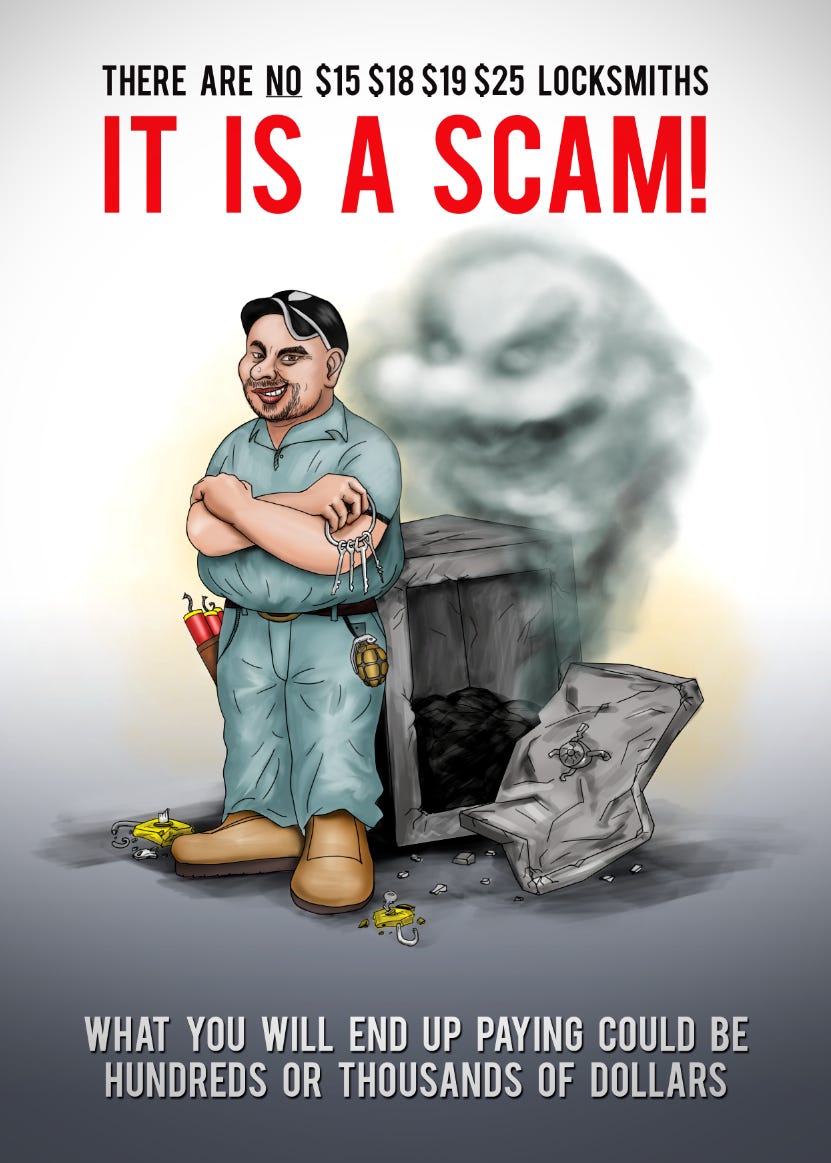
The counterfeit locksmith companies that advertise this use bait-and-switch pricing. Once on-site, the situation suddenly becomes more complicated. The problem is larger than expected. Additional work is required. The price begins to climb.
Faced with an urgent situation and few immediate alternatives, many customers reluctantly agree and their pockets suffer.
Though the damage doesn’t stop there.
Perhaps the greatest cost of the $19.95 illusion isn’t the invoice itself. It’s the expectation it creates.
These false promises steer unknowing customers away from the professionals. The legit locksmiths operate on a system of trust and transparency. They advertise honestly, and simply cannot compete against the more affordable option.
Once a customer sees a lockout advertised for $19.95, every legitimate quote begins to sound expensive by comparison. Honest pricing suddenly appears inflated. Transparency becomes harder to recognize.
Locksmiths then lose jobs to promises that can’t reasonably be fulfilled, and when they’re eventually called in to correct the situation, they often find themselves doing more than repairing locks or making keys.
They’re rebuilding trust.
That’s what makes the $19.95 illusion so damaging. It doesn’t just mislead customers—it distorts their understanding of what professional locksmith service actually costs.
Trust Is Much Harder to Replace Than A Lock
Every time a customer says, "The last locksmith charged me…”, or “Another company quoted me…”, a legitimate locksmith is forced to compete with a prior experience they had nothing to do with.
Counterfeit money can be removed from circulation. Counterfeit products can be recalled. Counterfeit locksmiths are much more difficult to track, prevent, or protect against. This is why locksmiths must practice extra caution in delivering honest pricing, professionalism, transparency, and quality of work. They must be fast, clean, precise, and experts in customer service. There are bad actors willing to damage the reputation of an entire industry for a quick profit. So the locksmiths themselves must dutifully present as the justice system—consistently doing the right thing, all the time to effectively combat against the counterfeiters.
The scammer gets paid once. The legitimate locksmith pays for years. The customer is left questioning every quote, scrutinizing every recommendation, and wondering whether they're being taken advantage of yet again.
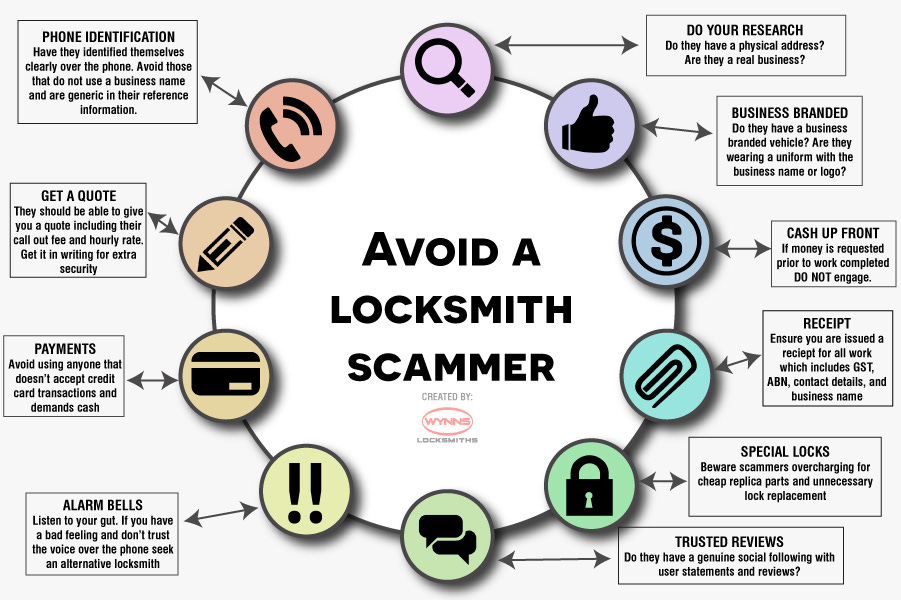
Separating the Genuine from the Fake
Look for a physical business presence. Read reviews from multiple sources. Ask questions. Request pricing before work begins. Verify licensing where applicable. Be wary of service calls that seem dramatically cheaper than every other option.
Most importantly, remember that professional locksmith service has real costs behind it—vehicles, fuel, tools, training, insurance, and years of experience don’t come free.
For locksmiths, the solution isn’t racing to the bottom. It’s continuing to do what legitimate professionals have always done: showing up on time, communicating clearly, standing behind their work, and building trust one customer at a time.
Counterfeit locksmiths thrive on confusion. Professional locksmiths succeed through reputation. While reputation takes longer to build than a website or a fake listing, it’s much harder to fake.
Lastly, always remember…
The most valuable tool a locksmith carries isn’t a key machine, programmer, or pick set.
It’s trust.
-Ryan Barbin, AKS
