Lishi Tools: Unraveling The Mystery
Posted by Ryan Barbin, AKS on Oct 19th 2026
In the locksmith world, few names spark more debate than… Lishi.
In a quiet workshop in 2000, a modest locksmith’s backyard craft became the whisper on every locksmiths lips. It opens locks in minutes, but leaves behind questions no one can answer, and a story that remains shrouded in mystery.
The Origins
At first, it was a quiet curiosity—a homemade invention passed from one set of hands to another, whispered about at trade shows and locksmith gatherings. Some dismissed it as a gimmick. Others swore it was revolutionary.
But as the tools spread, so did the questions. Who exactly was Mr. Li? How did a single craftsman create something that would change the locksmith world overnight? And why, even today, do debates still rage about what is genuine, what is original, and what is simply a clever imitation?
Mr. Li’s first big success was the HU66 blind reader for Volkswagen door locks, a tool that allowed users to read wafer depths more efficiently. Over the years, he continued to create and patent various other tools including the HU66 lock pick. His original designs featured the trademark oval Lishi logo and were first introduced to the United States in 2008 at the ALOA (Associated Locksmiths of America) Trade Show.
In 2009, Mr. Li partnered with UAP Limited (a.k.a. Tradelocks) and they started creating the world’s first 2-in-1 Lishi tools, combining blind touch picks and key readers into a singular tool, which they branded as Genuine Lishi tools. However, Mr. Li and Tradelocks parted ways after a dispute over exclusivity, arising from Mr. Li’s decision to sell his tools to other Chinese resellers. This was seen as a breach of contract with Tradelocks. Mr. Li then went on to brand his own tools as “Original Lishi”, and in some countries—due to trademark limitations—”Mr. Li’s Tools”.
How exactly Genuine Lishi was legally able to continue to manufacture Lishi tools utilizing Mr. Li’s designs—that part is a bit of a mystery. Perhaps there was some loophole in the agreement, but the answer to that remains uncertain.
Genuine vs. Original
Aside from Genuine and Original Lishi, there are now many other companies manufacturing knock-off Lishi tools, most often of considerably lower quality and accuracy. Often, the lines laser engraved onto the reading panel are off sometimes, which makes "reading" your depths off, or hitting the wafer spaces difficult. In 2018, Original Lishi began using the verification label system to try to combat against the increasing number of copycat manufacturers, but as the systems get smarter, so do the criminals. Thus, many of the copy houses have begun making counterfeit labels.
The Original Lishi website states:
Please note: Original Lishi was founded by Mr. Li in 2013 for overseas markets only and has NO China-based dealers at all.
All tools bought with above green/blue labels (no matter fake or copied) are NOT supported or warranted by Original Lishi Tools nor it’s dealers.
All Original Lishi tools with our official verification labels (shown below) are endorsed by Mr. Li, and they are supported and warranted throughout our authorized dealers. Our authorized Original Lishi Dealers can be found by visiting: https://originallishi.com/vendors/.
Word to the wise—from Steve Sacco, Locksmith and Original Lishi webmaster and social media contributor:
“Knockoff tools can break, leaving pieces of the tool inside the target lock. The tools can also break in such a way as to damage a customer’s lock and vehicle.”
I had the pleasure of speaking with Mr. Sacco to discuss the history of Lishi tools, Mr. Li, and his work as a locksmith working with the Original Lishi brand.

The Lishi Locksmith
In 2013, Steve became the webmaster for Just Cars. It was there, in 2014, where he first met Mr. Li—who was teaching people to use his Lishi tools at a Midwest Keyless booth. Mr. Li didn’t speak English, but Steve utilized his interpreter, James Chen—the Lishi Marketing Vice President. He learned of Mr. Li’s talents and dedication to the locksmith community and industry.
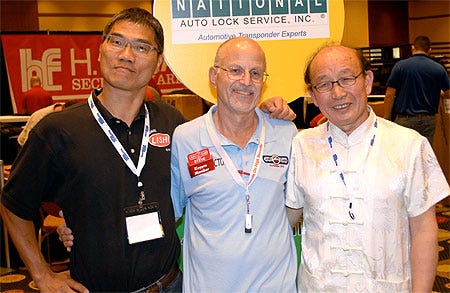
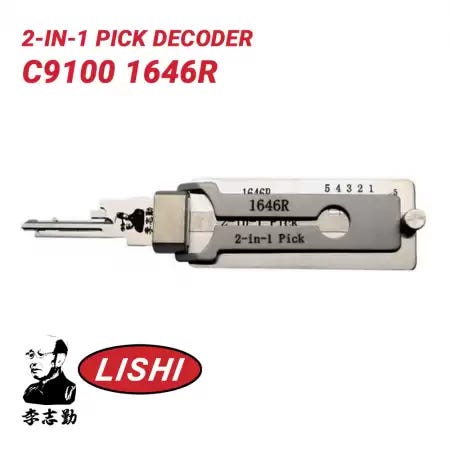
The following year, at the 2nd Annual Midwest Keyless Lishi Academy in Illinois, Steve met with Mr. Li again and was then offered the position of Original Lishi webmaster. These days, aside from working as a locksmith, Steve dedicates much of his writing, teaching, knowledge and talent to the Original Lishi brand and holds Mr. Li in high regards for his contributions to the industry. He has also helped in the development of some tools, including the 1646 and 1646R Compx mailbox lock tools.
The Lishi Bandwagon
I asked Mr. Sacco if the rise of smart keys and electronic locks posed any threat to the continuation of the Lishi tools as they currently stand. He assured me that there was no worry, as smart keys and electronic locks still fail, and most manufacturers still incorporate a keyed bypass lock, so the Lishi tools can be used to tackle those when a key is unavailable.
Steve continued to share how Lishi tools are also popular with roadside assistance and tow companies, as many now offer damage-free lockout services. And there is still more to come in the growth and development of the Lishi brand and Mr. Li’s tools, as they are currently creating cutout tools for door locks that are located behind door handles.
Learning to Lishi
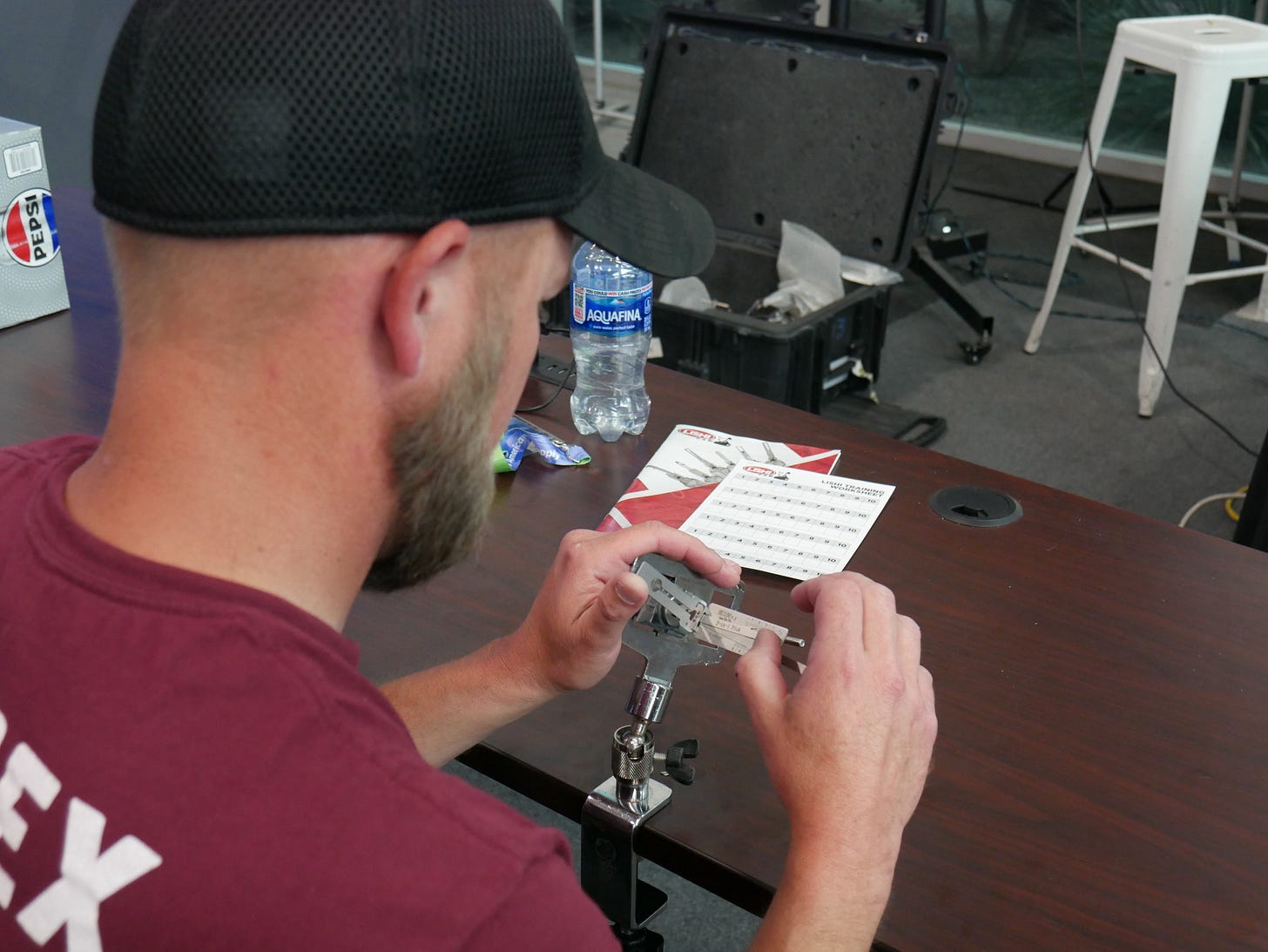
Professional training is available through courses at American Key Supply’s LVLU (Las Vegas Locksmith University), or directly from Mr. Sacco at TheLishiProfessor.com.
Lishi tools are both a marvel and a mystery—a revolution in locksmithing, built on precision, but still bound by the mechanical puzzles of the locks it aims to master. Meanwhile, somewhere in a quiet workshop half a world away, Mr. Li still shapes steel into secrets to be decoded…
As the old Chinese proverb warns: ‘The wise man keeps the key, the fool keeps the lock.’ In the case of Lishi, it seems one man has always held both. An inventor. A pioneer. A master tradesman. But in the locksmith world, one thing is certain—Lishi is less a tool… and more a legend still being written.

—Ryan Barbin, AKS
