Shark Tank: Food Truck vs. Locksmith Van
Posted by Ryan Barbin, AKS on Oct 20th 2026
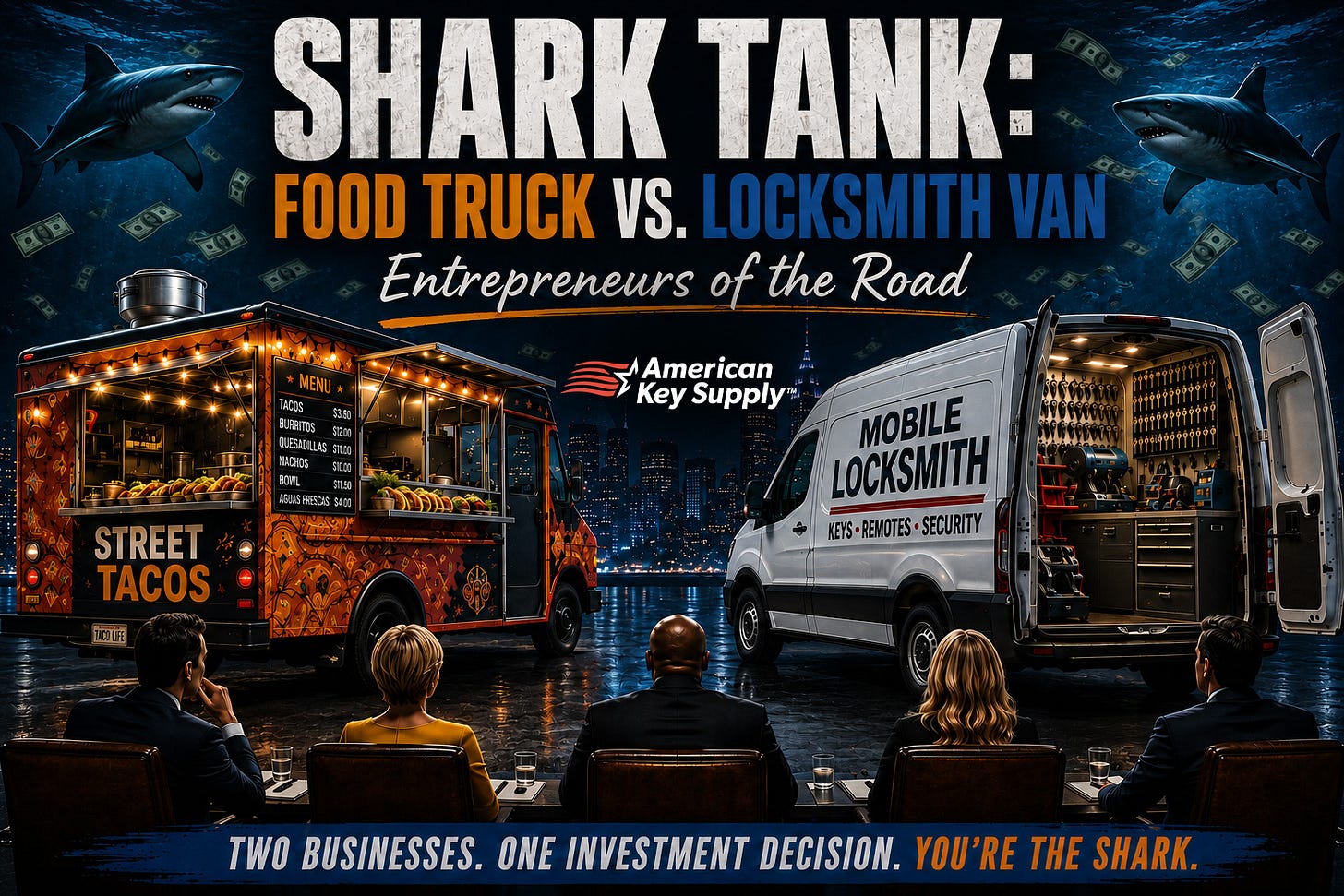
Every day, thousands of entrepreneurs wake up, start a vehicle, and drive towards uncertainty.
Some carry tortillas. Others carry Toyota smart Keys.
They may serve completely different customers, but they are chasing the same thing:
The next sale.
Today, we’re putting both businesses under the investors microscope.
Welcome to the tank.
The Business of Mobility
Two storefronts. Both operate on 4-wheels. Both bring solutions directly to the customer, wherever they might be. One serves lunch. The other delivers access.
But strip away the menus, logos, and the products, and something interesting happens.
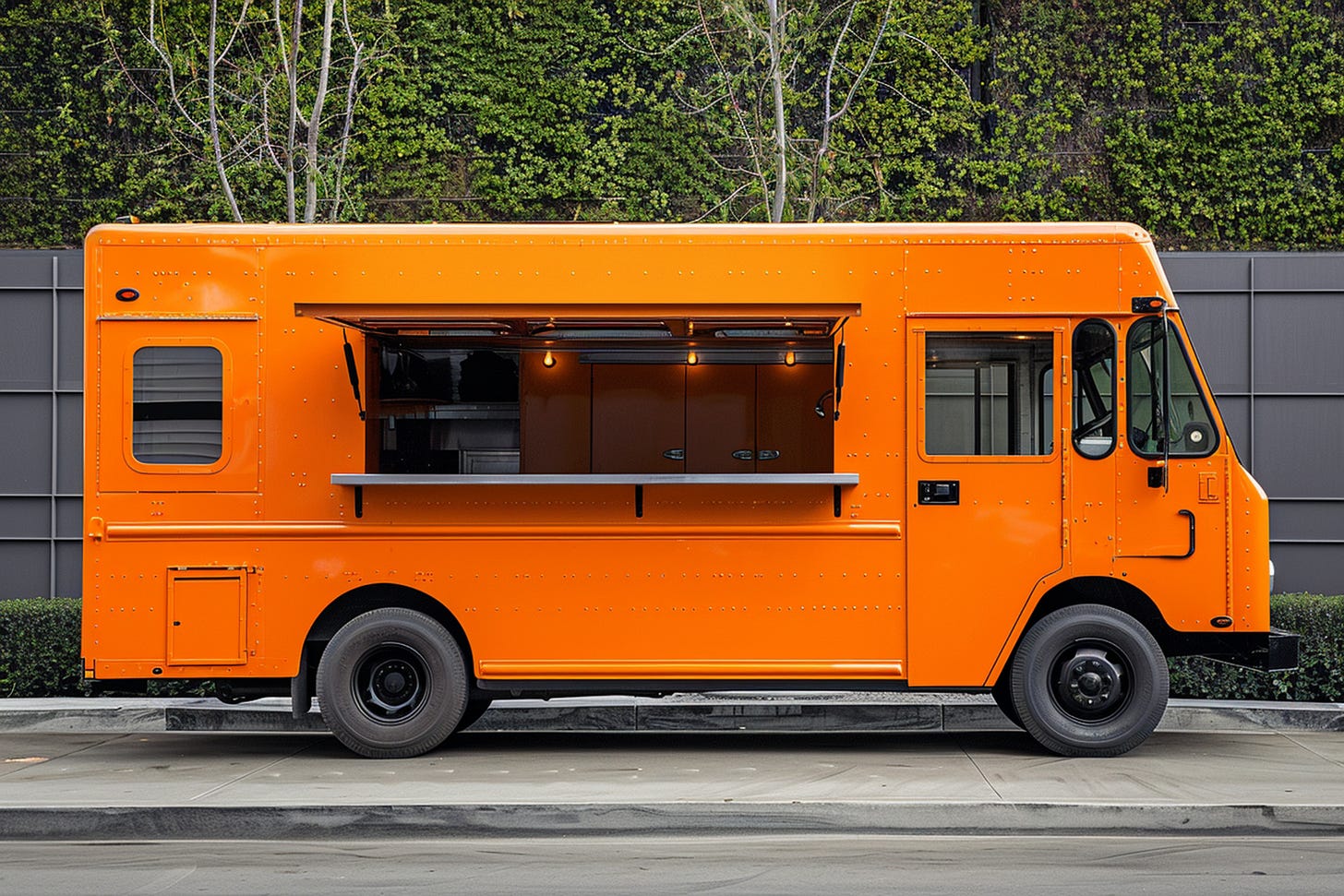
They're built on the same entrepreneurial foundation. Both require significant upfront investment. Both demand specialized equipment, carefully managed inventory, and the ability to adapt to changing customer needs. Their businesses have to survive potholes, weather, traffic, and whatever challenges the road throws their way.
In many ways, they’re not competing in the food industry or the locksmith industry. They are competing in the business of mobility.
While customers may be looking at completely different things, the entrepreneurs behind the wheel wake up in the morning and ask themselves the same questions.
Will today be busy?
Will the next stop be profitable?
Was the investment worth it?
How do I maximize my return in a business built on uncertain roads and infinite directions?
So before we decide who gets the investment deal...
Let’s take a closer look at the businesses behind the van.
Investing in the Startup
This is where our two initial investments begin to diverge.
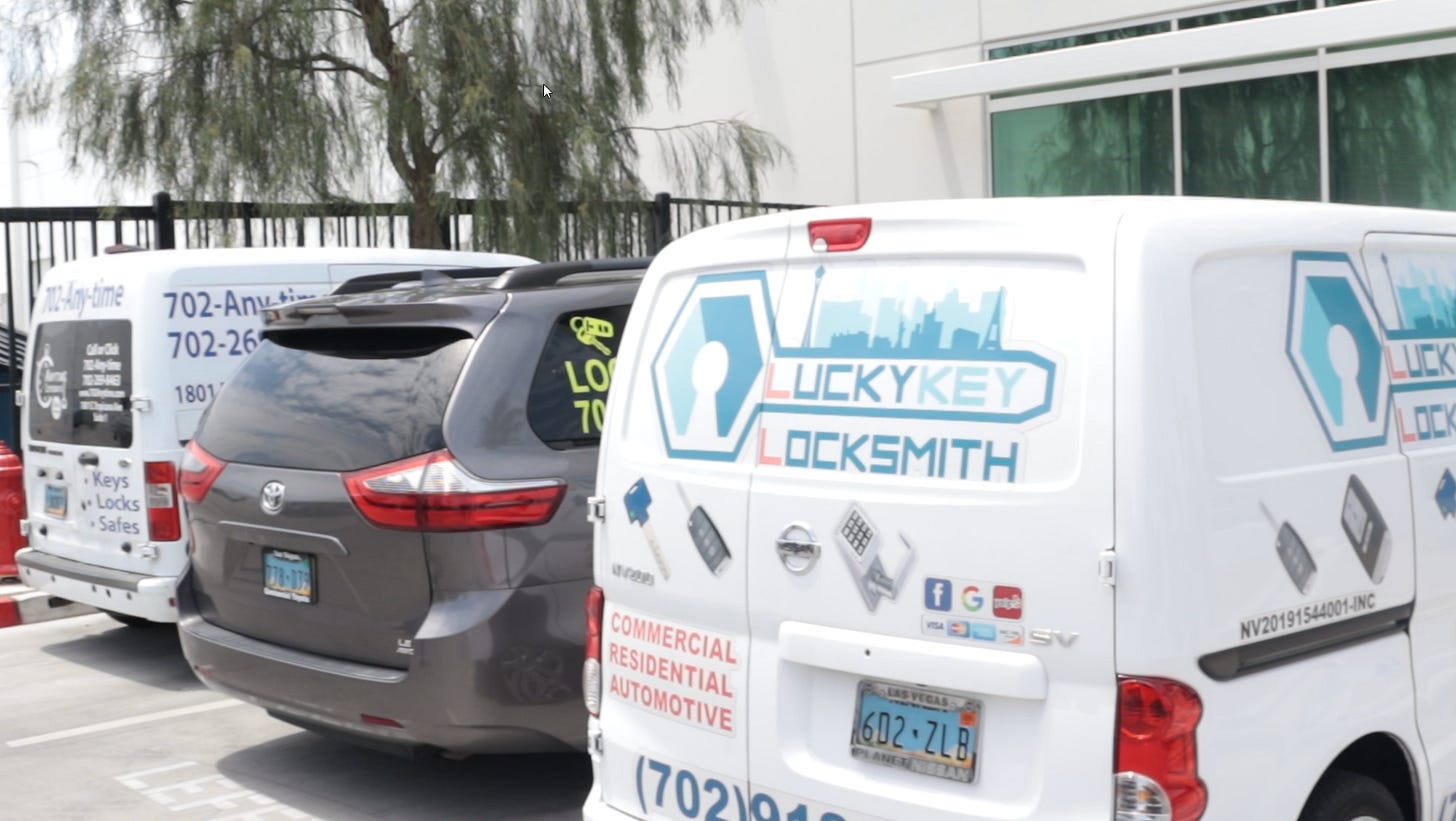
There are plenty of locksmiths who started out working from the trunk of a sedan or the back seat of an SUV. It isn’t ideal, but it’s possible. As business grows, so does the vehicle—eventually evolving into a purpose-built mobile workshop.
A food truck entrepreneur doesn’t have that luxury. Before the first customer can order lunch, the truck must already exist. The kitchen has to be built, the equipment installed, the permits approved, and the business ready to operate.
Both entrepreneurs face an important investment decision. Should they buy new or used? Build it themselves from an empty shell, or invest in a professionally outfitted vehicle that's ready to hit the road?
Choosing the right mobile office setup is a very important initial investment decision. Being stuck on the side of the road not only halts the business, it can be a costly mistake.
Sharks Note: From an investor’s perspective, that’s a significant distinction. A food truck demands a larger commitment before generating revenue, while a locksmith business offers a lower barrier to entry and the opportunity to reinvest profits into growth over time.
Estimated Startup Investment
Food Truck: Approximately $75,000–$250,000+ before opening day.
Mobile Locksmith: Anywhere from $5,000–$25,000 to get started using an existing vehicle, with fully equipped automotive locksmith vans often representing $75,000–$150,000+ in combined vehicle, tools, equipment, and inventory.
Outfitting the Operation
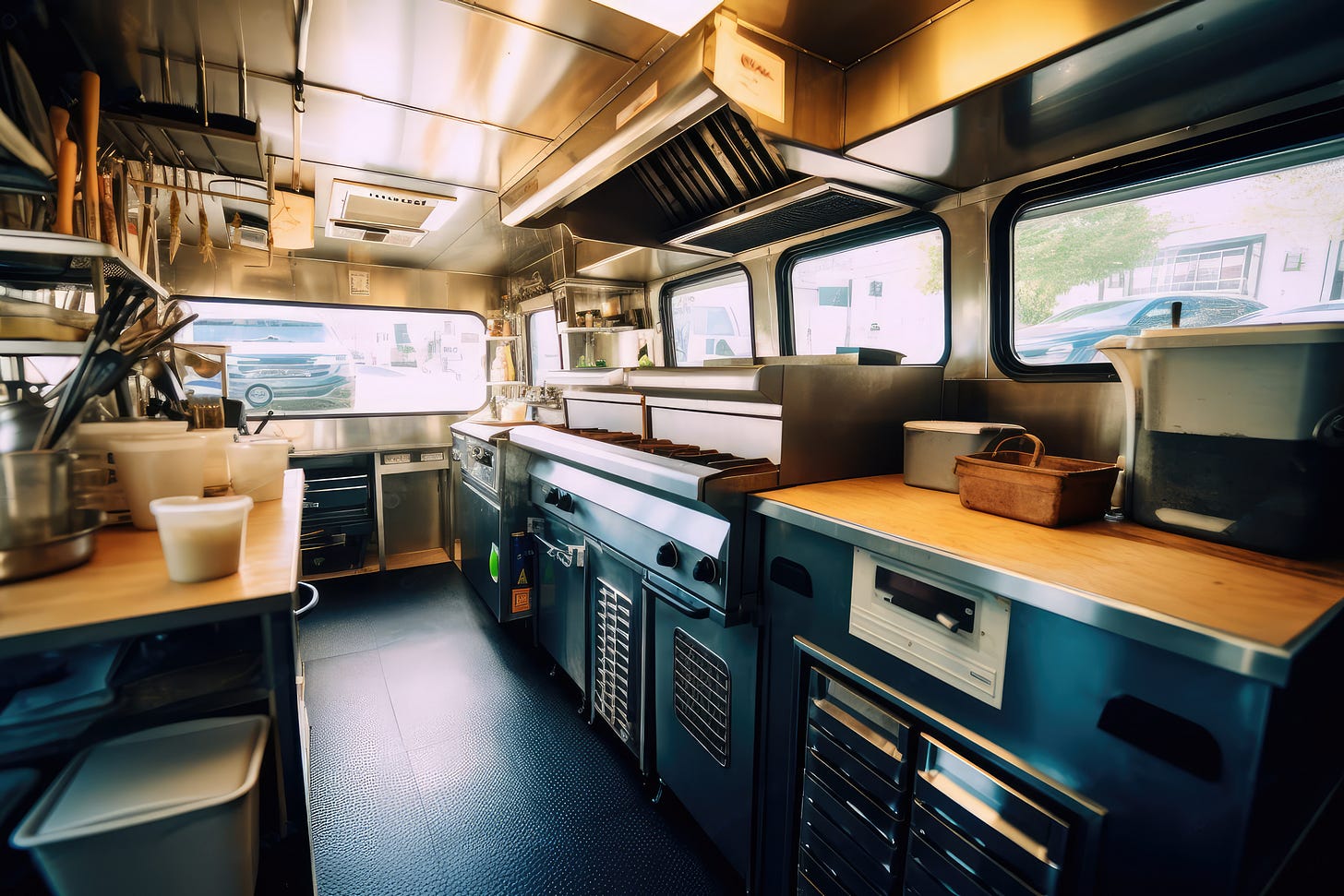
For a food truck, that means commercial-grade equipment capable of producing meals quickly, consistently, and safely. Refrigeration, grills, fryers, prep stations, ventilation systems, generators, and food storage can quickly become one of the largest startup expenses—especially as the menu becomes more ambitious.
For a locksmith, the investment looks different but serves the same purpose. Key cutting machines, automotive programmers, diagnostic equipment, lock picks, Lishi tools, key blanks, remotes, and specialty tools can represent tens of thousands of dollars before the first major job is ever completed. The more services a locksmith offers—automotive, residential, commercial, or access control—the more specialized the equipment becomes.
Fortunately, both businesses can scale over time.
A food truck may begin with a simple menu and gradually expand into new offerings as revenue grows. Likewise, many locksmiths start by focusing on a specific niche before reinvesting profits into additional tools, equipment, and training that allow them to serve a wider range of customers.
But equipment alone doesn’t build a business.
Presentation matters.
Whether it’s an eye-catching vehicle wrap, an inviting menu board, a recognizable logo, or a professionally branded service van, the exterior often determines whether customers take the time to discover what’s inside. In both industries, appearance is often the first investment in customer confidence.
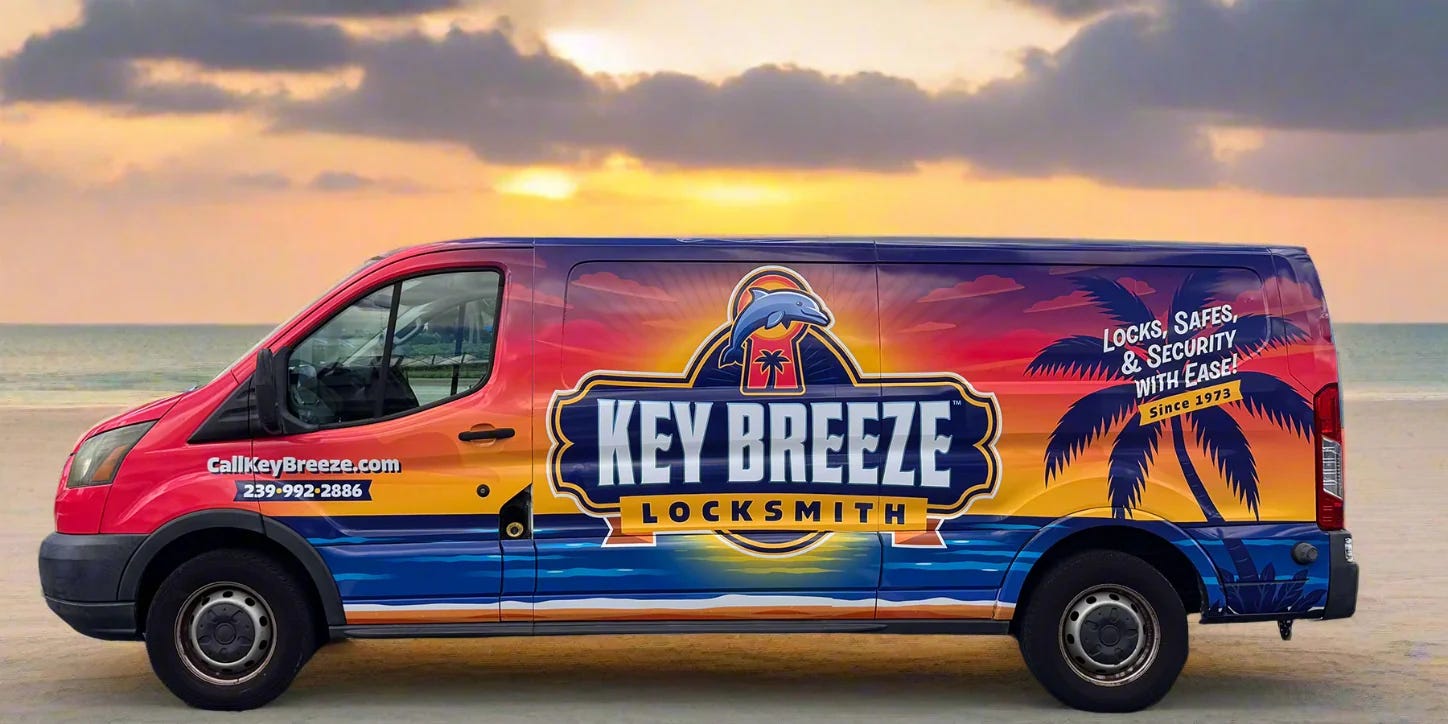
Shark’s Note: For both businesses, equipment isn’t just an expense—it’s an investment in capability. Every dollar spent expands what the business can offer, increases efficiency, and opens the door to additional revenue. While food trucks invest in the ability to prepare meals, locksmiths invest in the ability to solve more complex security challenges. In both cases, the right equipment isn’t a luxury—it’s the engine of growth.
Estimated Equipment Investment
Food Truck: Approximately $30,000–$100,000+ for commercial kitchen equipment, refrigeration, cooking appliances, ventilation, generators, prep stations, and food storage. Costs vary greatly depending on menu complexity and whether equipment is purchased new or used.
Mobile Locksmith: Approximately $10,000–$75,000+ for key cutting machines, automotive programmers, diagnostic tools, lock picks, Lishi tools, inventory, and specialty equipment. Advanced automotive locksmiths can easily exceed this range as they add multiple programmers, EEPROM equipment, laser key machines, and expanding inventory.
The Cost of Compliance
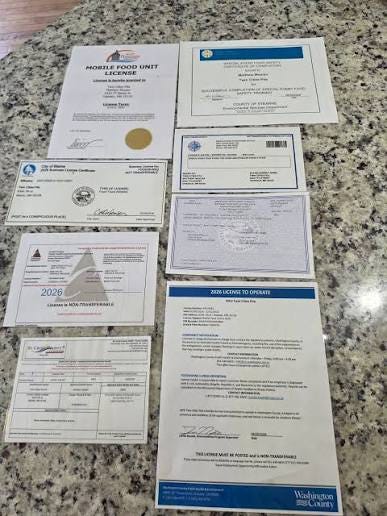
For food truck owners, compliance can be one of the most demanding parts of opening day. Business licenses, food handler certifications, health department inspections, fire safety requirements, commissary agreements in many jurisdictions, and local permitting all work together to ensure food is prepared and served safely.
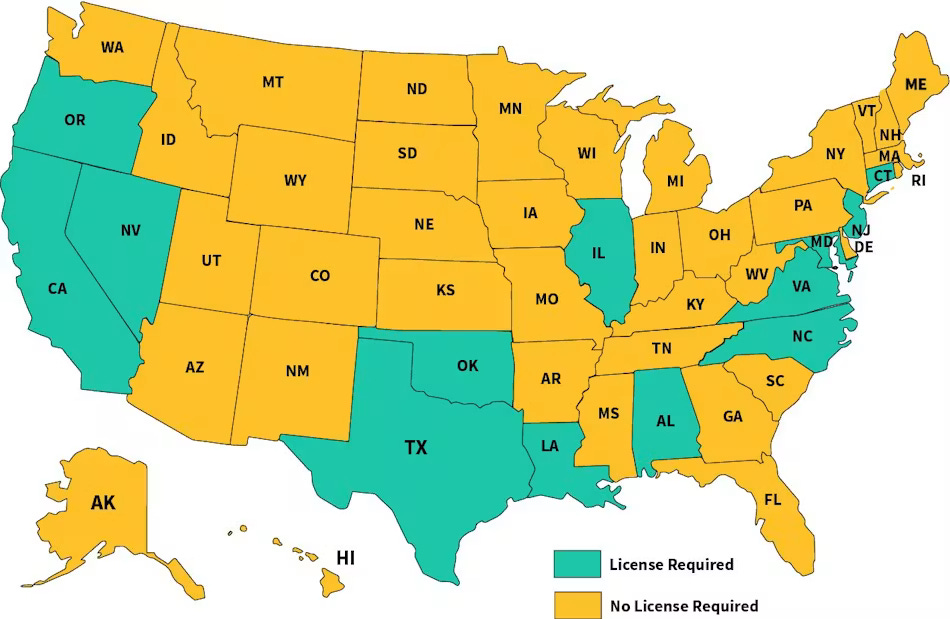
For locksmiths, the requirements are less uniform. Currently, only 13 U.S. states require locksmith licensing, meaning the path to opening a business can vary significantly depending on where it’s located. Even in states without licensing requirements, however, entrepreneurs often invest in industry certifications, continuing education, insurance, and specialized training to build credibility and expand the services they can offer.
In both industries, compliance is more than a legal obligation—it’s an investment in trust. Customers want confidence that the person preparing their meal or securing their home has met recognized standards of professionalism.
Shark’s Note: Regulations may not generate revenue, but they protect it. A business that invests in compliance from the beginning reduces risk, builds customer confidence, and creates a stronger foundation for long-term growth.
Estimated Compliance Costs
Food Truck: Approximately $2,000–$15,000+ for business licensing, food safety certifications, permits, inspections, insurance, and local regulatory requirements. Costs vary significantly by city and state.
Mobile Locksmith: Approximately $500–$5,000+ for business licensing (where applicable), insurance, bonding, training, certifications, and licensing fees. Requirements vary widely by state, with additional costs for specialized certifications and continuing education.
Money on the Shelves
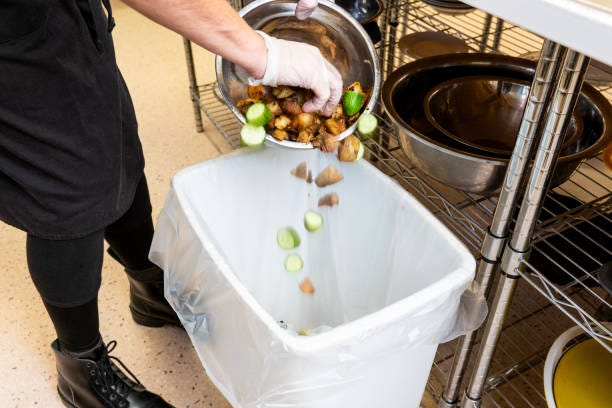
For food trucks, every ingredient has a shelf life. Food that’s prepared but never sold eventually becomes waste—money literally thrown away. But running out of inventory can be just as costly. A line of hungry customers means nothing if you’ve sold your last taco. Successful inventory management becomes a science of forecasting demand, minimizing waste, and ensuring every ingredient earns its place on the truck.
For locksmiths, the challenge is different.
Keys, locks, remotes, and hardware don’t spoil like produce, but they do become obsolete. Vehicle technology evolves, manufacturers discontinue platforms, and customer demand constantly shifts. A locksmith may have thousands of dollars invested in inventory for one generation of vehicles, only to find the next week’s service calls are for something entirely different.
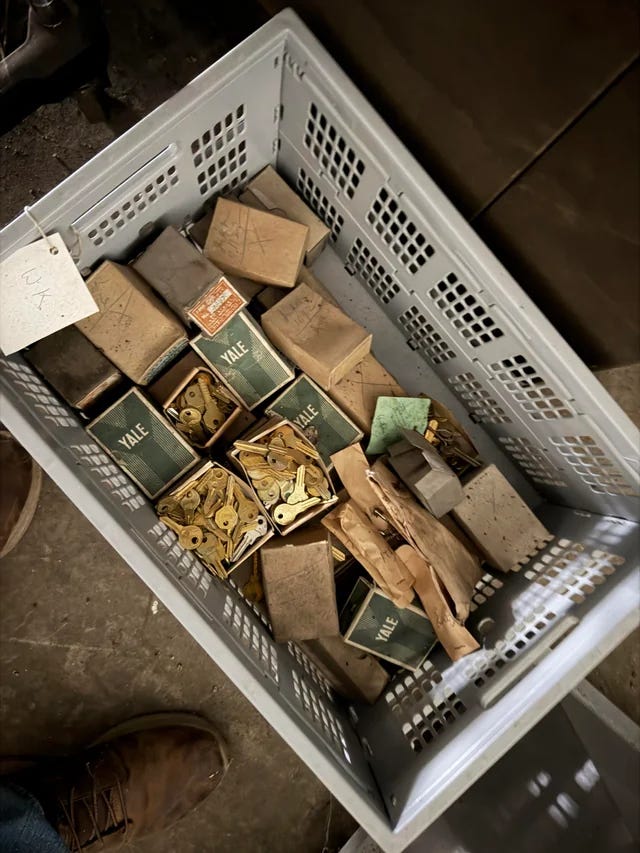
When locksmith inventory becomes dead stock, the loss is often far greater than a few bags of spoiled potatoes. Obsolete programmers, discontinued remotes, outdated transponders, and aging inventory can represent hundreds—or even thousands—of dollars sitting on a shelf collecting dust.
For both businesses, inventory is a balancing act. Buy too little, and you miss opportunities. Buy too much, and your money stops working for you. The challenge isn’t simply keeping shelves full—it’s knowing what belongs on them in the first place.
Shark’s Note: Inventory isn’t just a business expense—it’s tied-up capital. The best entrepreneurs don’t simply stock more inventory; they stock the right inventory. Every product on the shelf should have one goal: turning back into cash.
Estimated Inventory Investment
Food Truck: Approximately $2,000–$15,000+ in initial food, beverages, packaging, and consumable inventory, with continual replenishment based on demand.
Mobile Locksmith: Approximately $5,000–$50,000+ in keys, remotes, transponders, locks, hardware, batteries, and specialty inventory. Established automotive locksmiths may carry significantly more to support a wider range of vehicles and services.
Mastering the Craft
Both entrepreneurs benefit from ongoing education, practice, and experience. However, for locksmiths, continued learning is often less of a competitive advantage and more of a requirement for staying in business.
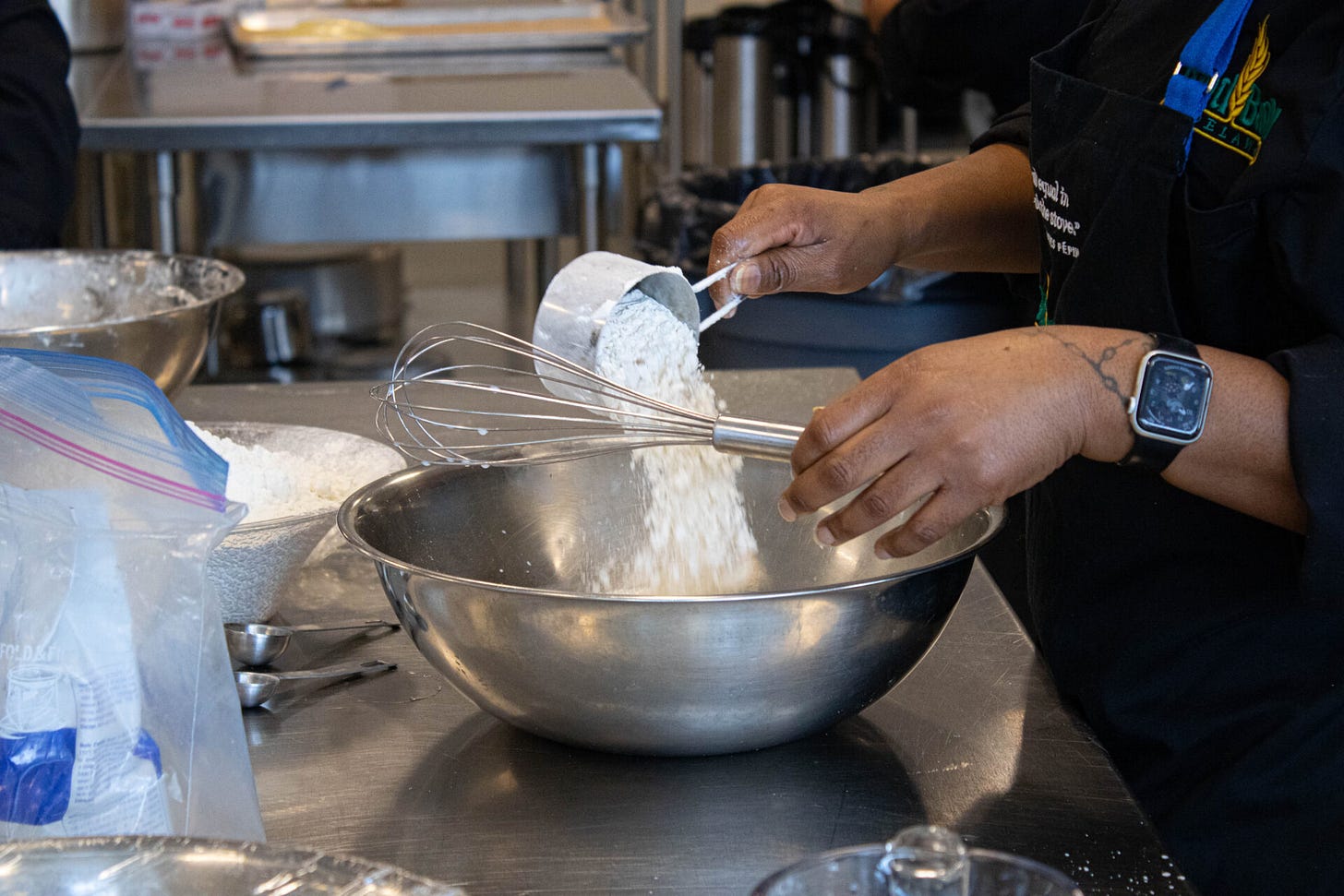
Food preparation is built upon consistency. Recipes, measurements, timing, and repeatable processes allow customers to receive the same meal every time they visit. While many food trucks continue to expand their menus and refine their techniques, others thrive by doing one thing exceptionally well. A simple menu, executed consistently, can become the very identity of the business.
Locksmithing is different.
The industry never stops evolving. Every year brings new vehicle platforms, new security technologies, new programming procedures, and new tools. A locksmith who stops learning risks becoming limited to yesterday’s vehicles while today’s customers drive away looking for someone with more current knowledge.
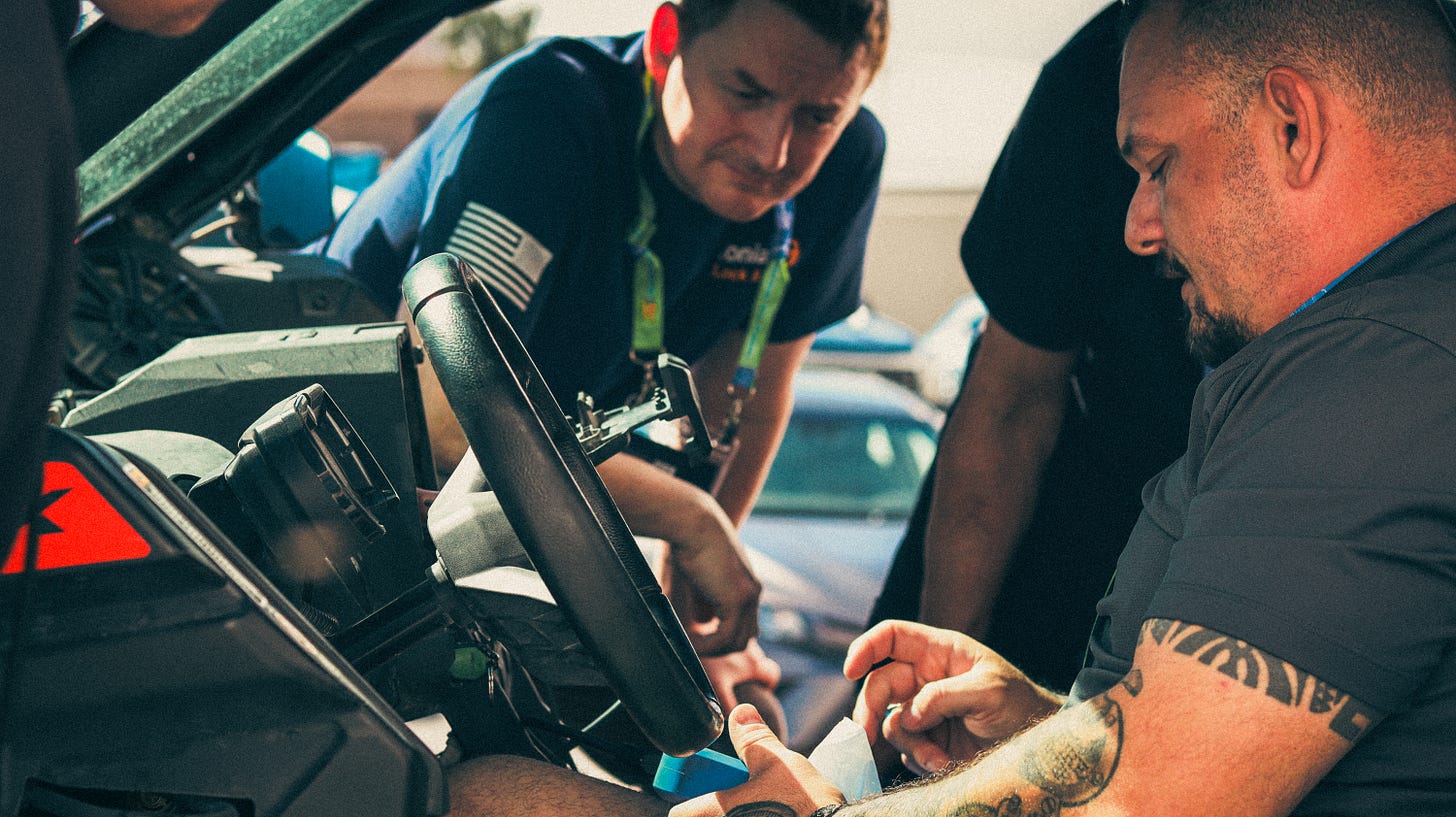
Continued education is one of the largest ongoing investments in the locksmith profession. Advanced diagnostics, EEPROM, key programming, Lishi techniques, high-security systems, key generation, access control, and manufacturer-specific procedures all require both specialized training and the tools to put that knowledge into practice.
Unlike a recipe that may remain unchanged for years, a locksmith’s skillset is expected to evolve alongside the technology it serves.
Shark’s Note: Knowledge is one of the few business investments that appreciates over time. Trucks depreciate. Equipment wears out. Inventory becomes obsolete. However, the entrepreneur who continually invests in learning increases the value of every other asset they own.
Estimated Training Investment
Food Truck: Approximately $500–$5,000+ for food safety certifications, culinary courses, business training, and ongoing professional development.
Mobile Locksmith: Approximately $1,000–$20,000+ over time for locksmith training, automotive programming classes, EEPROM instruction, Lishi certification, advanced diagnostics, manufacturer training, and continuing education—plus the specialized tools required to apply those skills.
The Road to Revenue
Both entrepreneurs must understand their market, identify their ideal customers, determine which jobs are worth taking, and decide how far they’re willing to travel. Time is money. Fuel isn’t cheap. Every mile driven is an expense that must ultimately pay for itself.
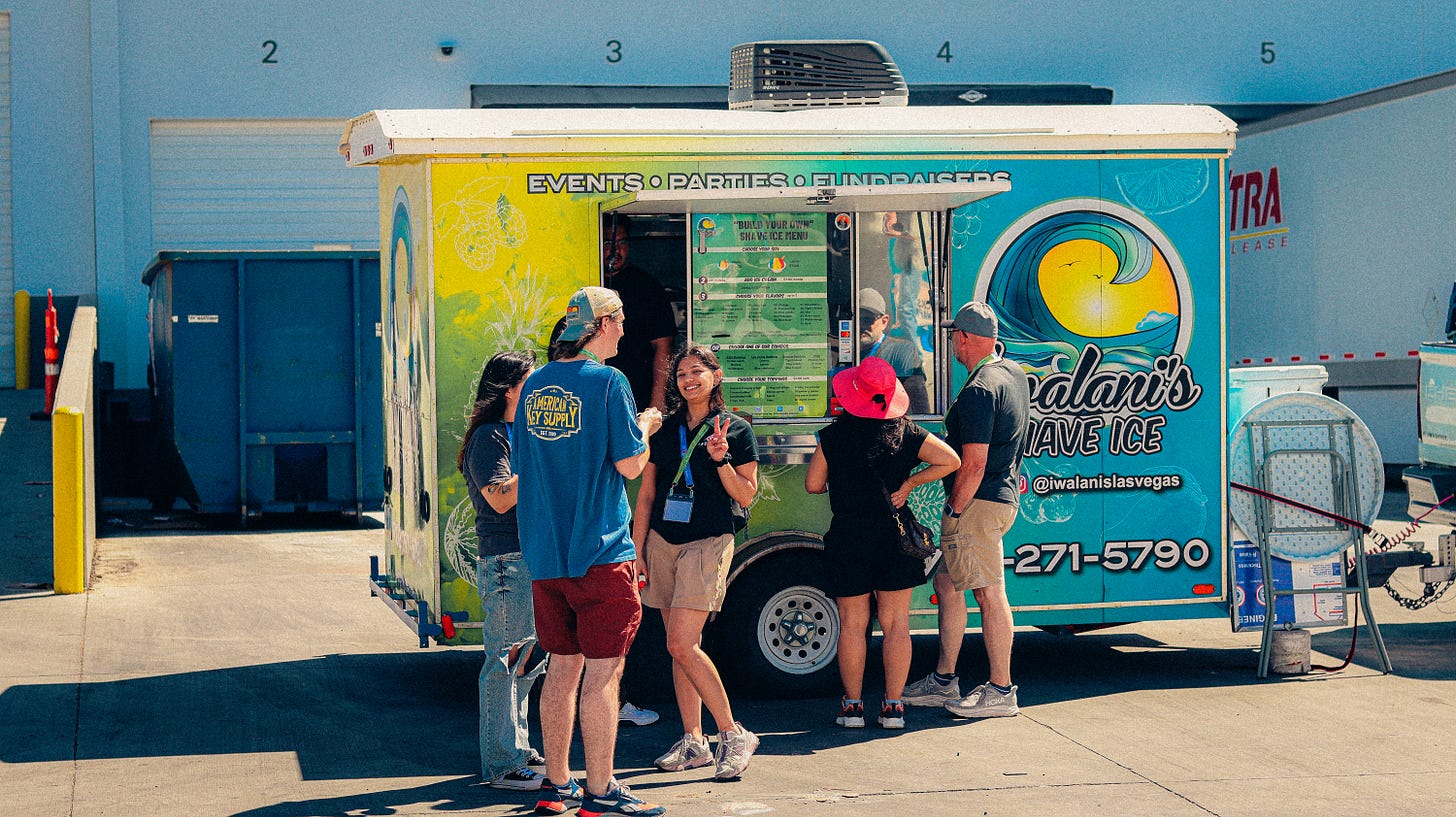
For a food truck, profitability often comes down to location and timing. Lunch crowds, festivals, breweries, office parks, and special events can generate hundreds of customers in just a few hours. A poor location, however, can leave a fully stocked truck waiting for customers who never arrive.
For locksmiths, revenue is built differently. Service calls are scattered across an entire city, making route planning and efficiency just as valuable as technical skill. A locksmith may spend thirty minutes driving to complete a fifteen-minute job, while another service call across town could consume half the day. Choosing the right jobs, pricing appropriately, and maximizing each trip become critical to long-term profitability.
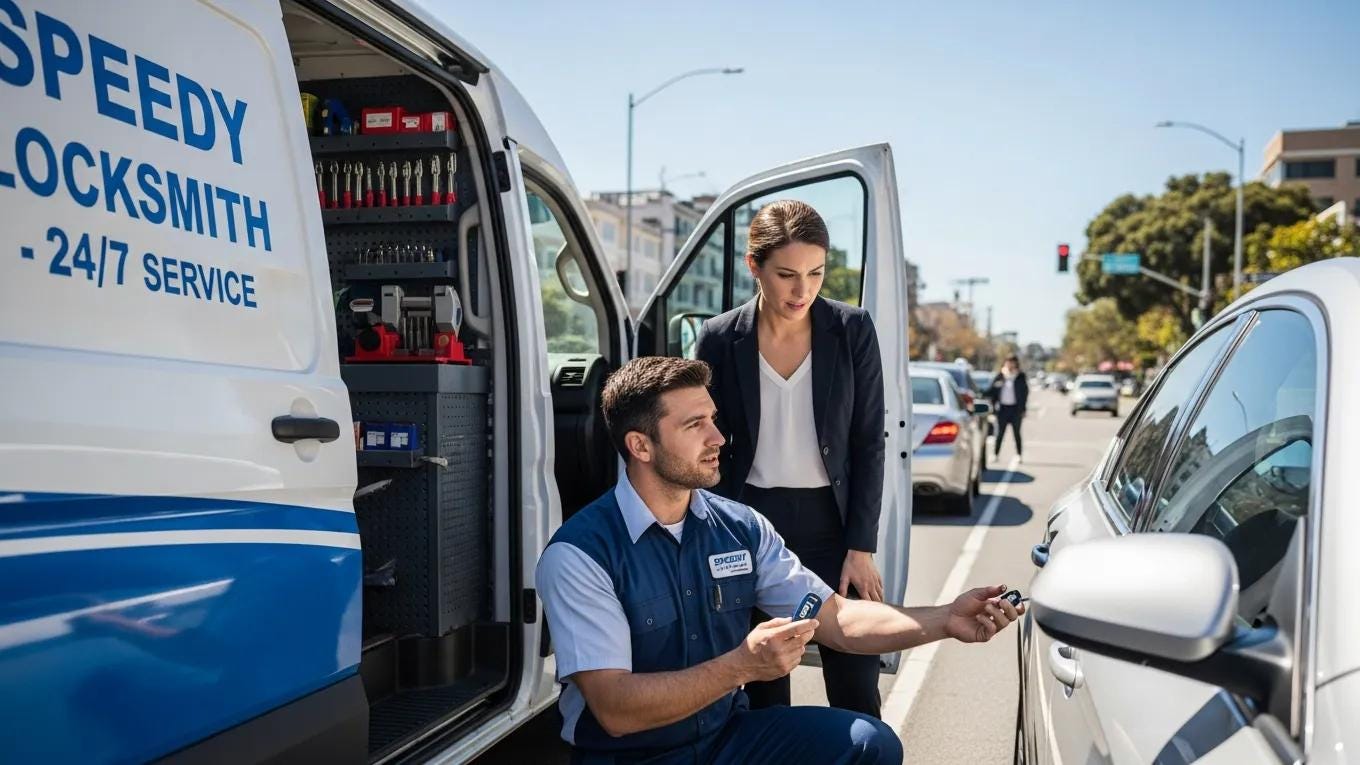
Neither business gets paid for driving. They get paid for what happens when they stop.
The most successful entrepreneurs learn how to turn every mile into meaningful revenue by reducing downtime, serving customers efficiently, and ensuring every stop contributes to the bottom line.
Shark’s Note: Revenue isn’t measured by miles driven—it’s measured by profitable miles. The entrepreneurs who understand routing, efficiency, pricing, and customer demand don’t just work harder—they make every mile work harder.
Estimated Revenue Potential
Food Truck: Average customer tickets typically range from $10–$25, with successful trucks generating $100,000–$500,000+ annually, depending on location, menu, and operating schedule.
Mobile Locksmith: Service calls commonly range from $75–$500+ depending on the job, with established mobile locksmith businesses often generating $150,000–$500,000+ annually, and high-volume automotive operations capable of exceeding those figures.
The Growth Model
For both food trucks and mobile locksmiths, success often follows a remarkably similar path. A second truck or service van. A brick-and-mortar location. Hiring employees. Expanding into new territories. Launching new products or services. Investing in better marketing. Building a recognizable brand.
At this stage, the differences between the two businesses begin to disappear.
Both rely on smart financial decisions. Both depend on customer satisfaction and reputation. Both require hiring and training the right people, and both reward entrepreneurs who understand when to take calculated risks—and when to stay the course. In the hands of a disciplined entrepreneur with a clear vision, both businesses offer tremendous opportunities to build something far larger than the vehicle they started with.
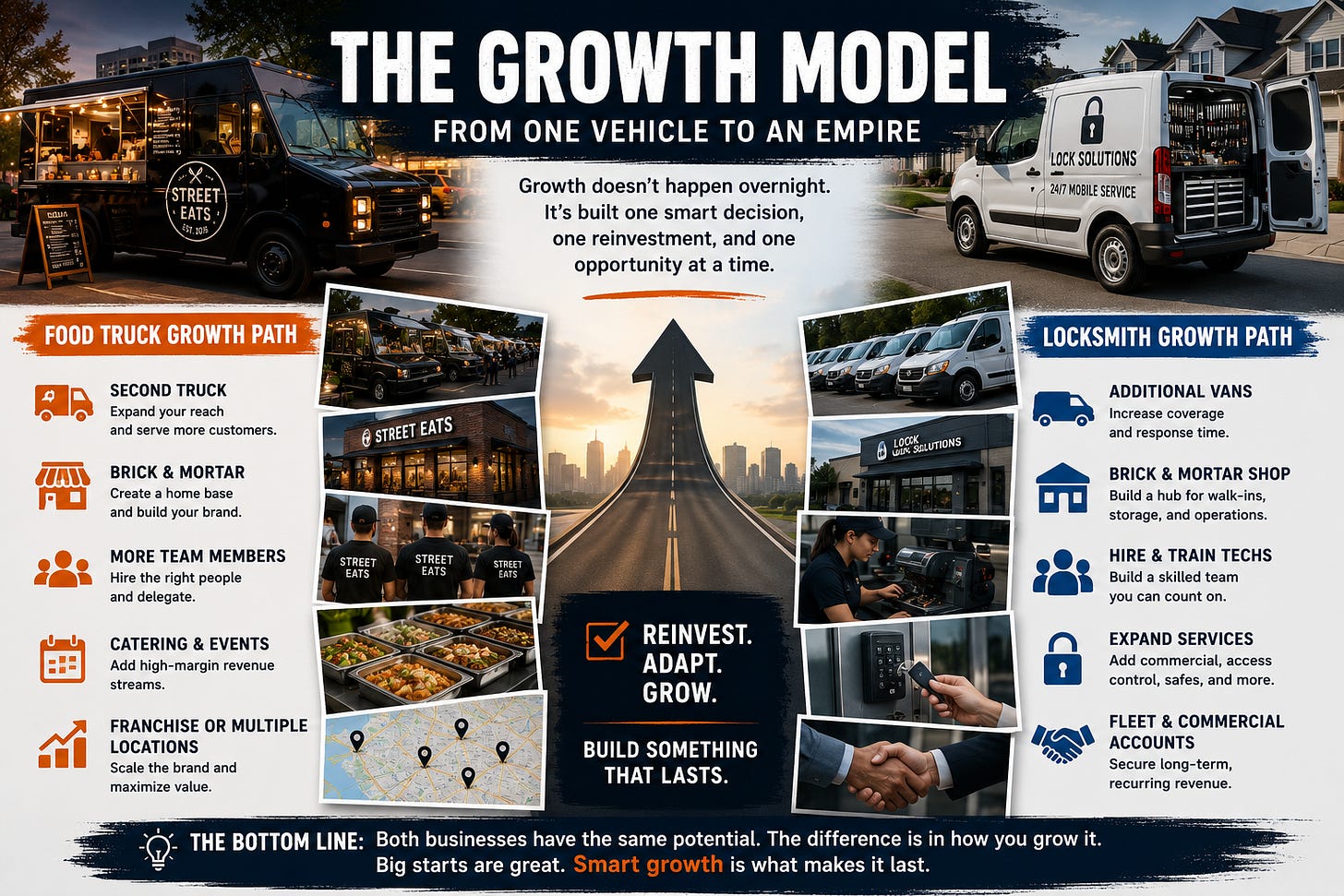
Growth doesn’t happen by accident. It’s the result of consistently reinvesting profits back into the business.
Shark’s Note: Businesses don’t scale because of what they sell—they scale because of how they’re managed. Whether it’s tacos or transponder keys, long-term success belongs to entrepreneurs who consistently reinvest in their people, their processes, and their customers.
The Investment Breakdown
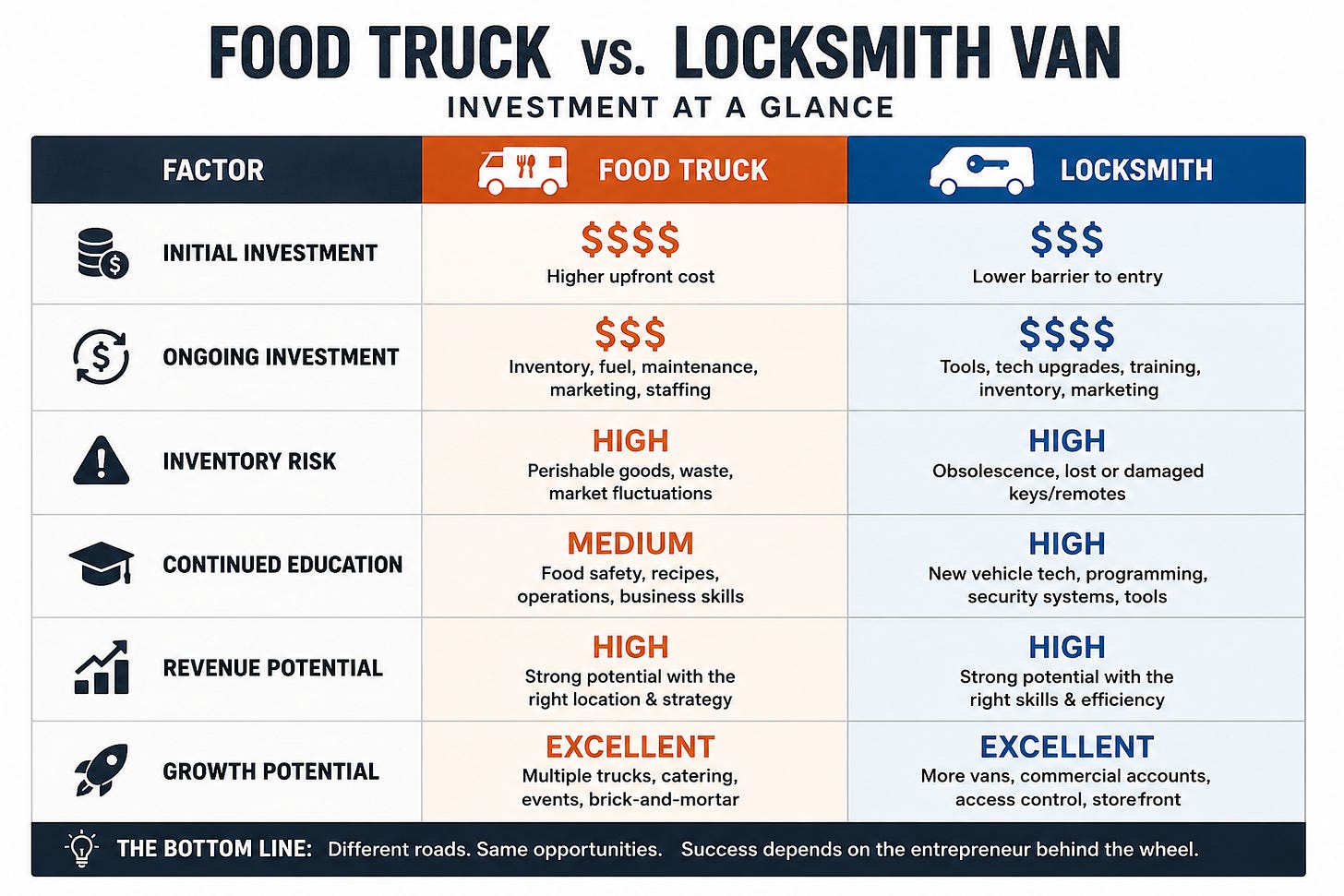
The food truck demands more from the entrepreneur upfront. Between the truck itself, the commercial kitchen, permits, equipment, and opening inventory, it’s not uncommon for the initial investment to fall somewhere between $110,000 and $365,000 before serving the first customer. The reward, however, is the ability to generate significant revenue immediately, especially when operating in high-traffic locations or catering large events.
The locksmith business follows a different financial path. While it’s possible to begin with as little as $20,000 to $40,000 by using an existing vehicle and focusing on a smaller range of services, many established automotive locksmiths ultimately invest $100,000 to $250,000 or more in service vans, inventory, programmers, key machines, diagnostic equipment, and continuing education. Rather than making one massive investment at the beginning, many locksmiths grow by continually reinvesting profits back into the business.
The risks are equally different.
Food trucks constantly battle spoilage, fluctuating food costs, weather, and the uncertainty of daily customer traffic. Locksmiths face rapidly evolving vehicle technology, expensive equipment upgrades, and inventory that can become obsolete almost overnight. One business risks throwing away yesterday’s lunch. The other risks being left behind by tomorrow’s technology.
There is another risk investors should consider: theft. While food trucks certainly aren't immune to break-ins or vandalism, many of their largest investments—grills, fryers, refrigeration systems, and ventilation—are literally bolted to the floor. A locksmith van tells a different story. Its most valuable assets are often portable: key programmers, diagnostic tools, Lishi picks, specialty equipment, and thousands of dollars in inventory. A single break-in can remove not only the tools themselves, but the business's ability to generate revenue until they're replaced. Insurance may cover the loss, but it can't replace lost time or disappointed customers.
Profitability, however, tells a much different story.
Both businesses have the potential to generate annual revenues well into the six figures when operated efficiently. Success depends less on the product being sold and more on the entrepreneur’s ability to control expenses, market effectively, provide exceptional service, and continually adapt to changing customer demand. In both industries, disciplined operators consistently outperform those with larger budgets but weaker business practices.
Shark’s Note: When all the numbers are added together, the two businesses arrive at surprisingly similar destinations by taking very different roads. The food truck requires a greater leap of faith on day one. The locksmith business rewards patience through continual reinvestment. Both carry meaningful risk. Both offer substantial upside. And both prove that long-term success has far less to do with the vehicle than it does with the person behind the wheel.
The Shark's Decision
Neither investment is inherently better.
Both require substantial capital. Both demand relentless work. Both depend on customer trust, operational efficiency, smart financial decisions, and the willingness to continually adapt. Both carry meaningful risk, and both offer the opportunity to build a thriving business for those willing to commit to the journey.
A food truck doesn’t become successful because it serves tacos. A locksmith doesn’t become successful because they cut keys. They succeed because someone was willing to invest in themselves before asking anyone else to invest in them.
Whether you’re serving lunch from a window or restoring access from a service van, you’re solving problems for people who need your help. The tools may be different. The customers may be different. But the entrepreneurial journey is remarkably the same.
So...
If I were a Shark, which business would I invest in?
I’d ask one final question:
Who is behind the wheel?
Because that’s the investment that matters most.
—Ryan Barbin, AKS
