The Locks We Weren’t Meant To Open: How Archaeology Is Learning To Unlock The Past Without Destroying It
Posted by Ryan Barbin, AKS on Oct 20th 2026
There may be nothing more tempting than something we’re told we can’t open.
A locked door or chest. A sealed letter. A buried tomb. A scroll that hasn’t been read in two thousand years. Heck, many people these days can’t even resist snooping inside their own partner’s cellphone.
There’s something about knowing we can’t access what’s hidden inside that can drive people to extremes just to find a way in.
Eventually, somebody is going to ask the question:
“Can you get me inside?”
Open Sesame
For locksmiths, getting inside isn’t necessarily the impressive part. It’s getting inside while causing as little damage as possible and preserving what matters. Archaeology has spent centuries learning the very same lesson.
For most of history, getting inside meant opening the thing in front of us. Break the seal. Lift the lid. Pick the lock. Open the door.
Over time, however, we’ve learned that the barrier isn’t always separate from the treasure. The locks, the doors, the chests—the very things that hold the mysteries inside—can be treasures themselves. And sometimes, opening them can reveal one piece of history while destroying another.
Few discoveries demonstrate that conflict better than the tomb of a 19-year-old Egyptian pharaoh that sat hidden beneath the desert for more than 3,000 years.
Someone Has Been Here Before
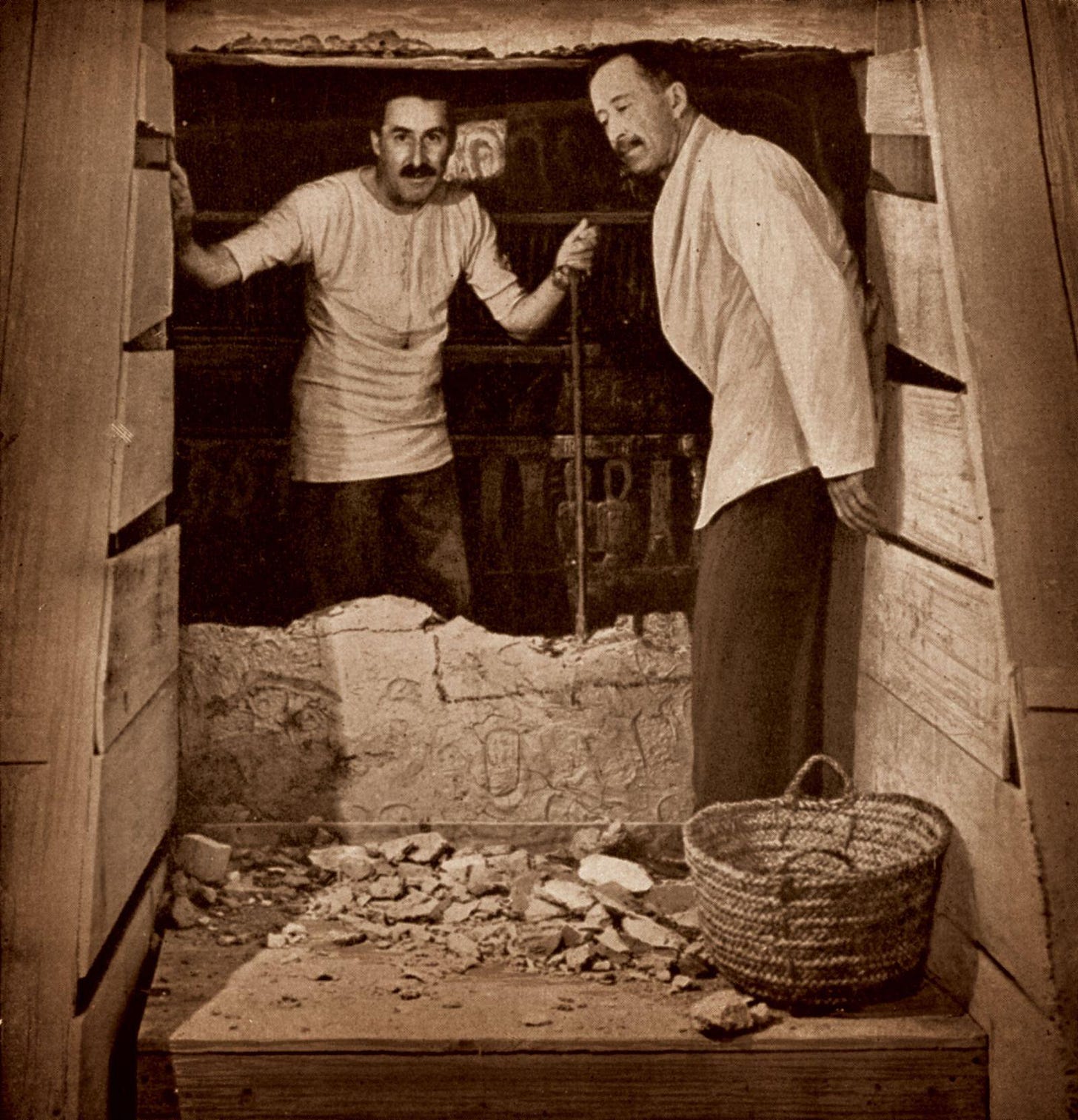
Carter’s team uncovered something in the desert floor: a step cut directly into the bedrock. One step became a staircase, descending beneath thousands of years of sand and debris—leading to a plastered doorway stamped with an ancient necropolis seal: Anubis, the jackal-headed guardian of the dead, positioned above nine bound enemies of Egypt. To Carter, the message would have been pretty clear—this was a royal tomb, and somebody had gone to considerable trouble to seal it away.
A lock can tell you more than what someone wanted to protect. Sometimes, it can tell you who tried to get in.
Carter contacted Lord Carnarvon and made him aware of his “wonderful discovery.” When Carnarvon arrived, they discovered evidence that someone else had gotten there first. Parts of the doorway appeared to have been broken through and subsequently resealed.
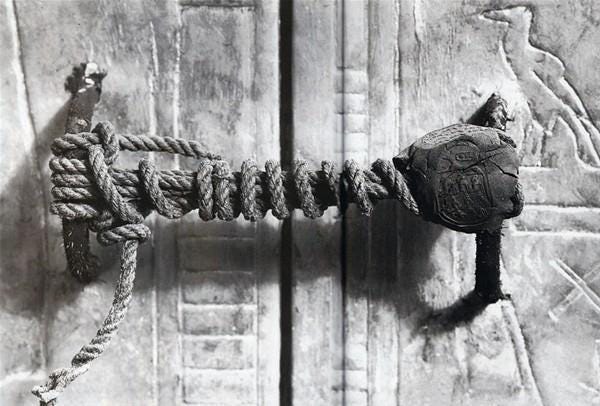
On November 25, Carter’s team opened the first doorway. Behind it, roughly thirty feet in, they encountered another sealed doorway. Carter made a small hole near the top and widened the opening just enough to fit a candle through.
Shapes began emerging from the darkness. Strange animals. Statues. Furniture.
And gold.
Everywhere, the glint of gold.
Though the most interesting thing Carter found may not have been what was waiting on the other side of the door.
It was the door itself.
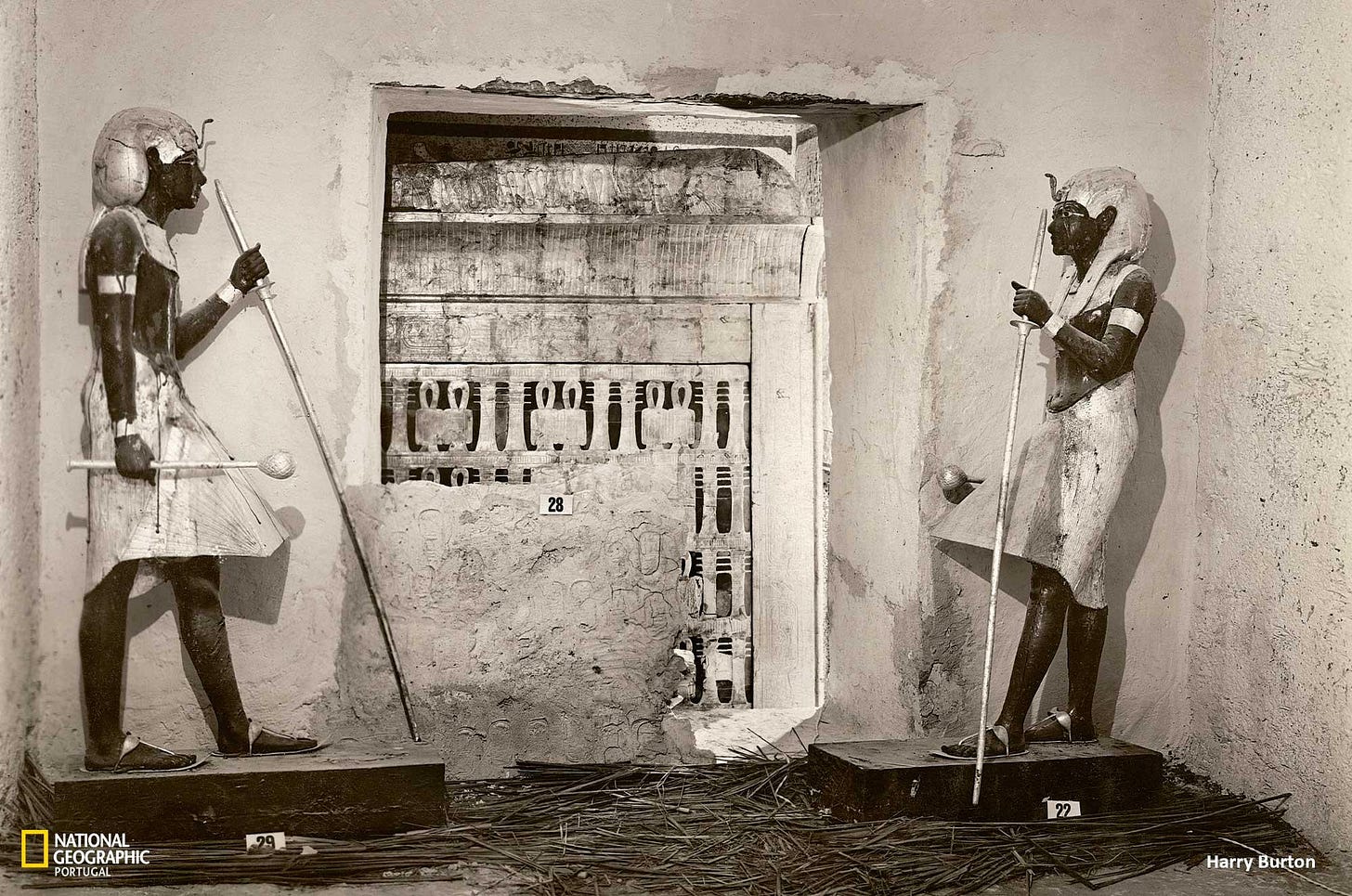
The damaged seals and resealed entrances told their own story. Someone had broken into the tomb thousands of years before Carter arrived, and the evidence they left behind helped archaeologists determine where ancient thieves had been—and, just as importantly, where they hadn’t.
To a locksmith, there’s something familiar about that. A lock isn’t simply an obstacle between you and whatever sits behind it. Its condition can tell you who tried to get in, how they tried, whether they succeeded and what happened afterward.
Every barrier Carter broke through gave him access to another piece of history. But once broken, that barrier could never again exist exactly as he found it.
And therein lies the problem:
How do you get inside without destroying what kept you out?
The Key that Ceased to Be
For restorers, simply forcing their way inside wasn’t an option. Whatever was hidden behind that steel lid mattered—but so did the lock keeping it there.
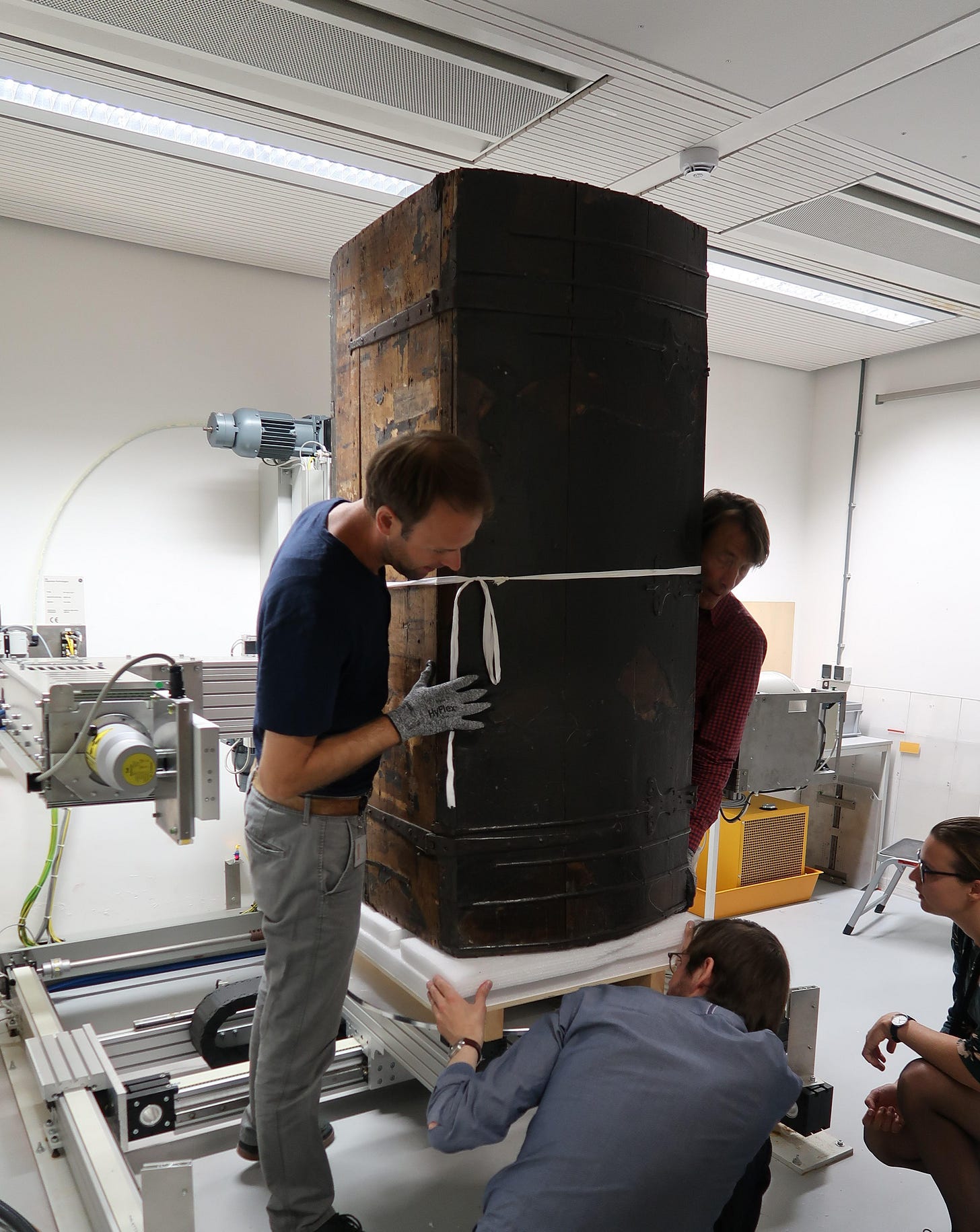
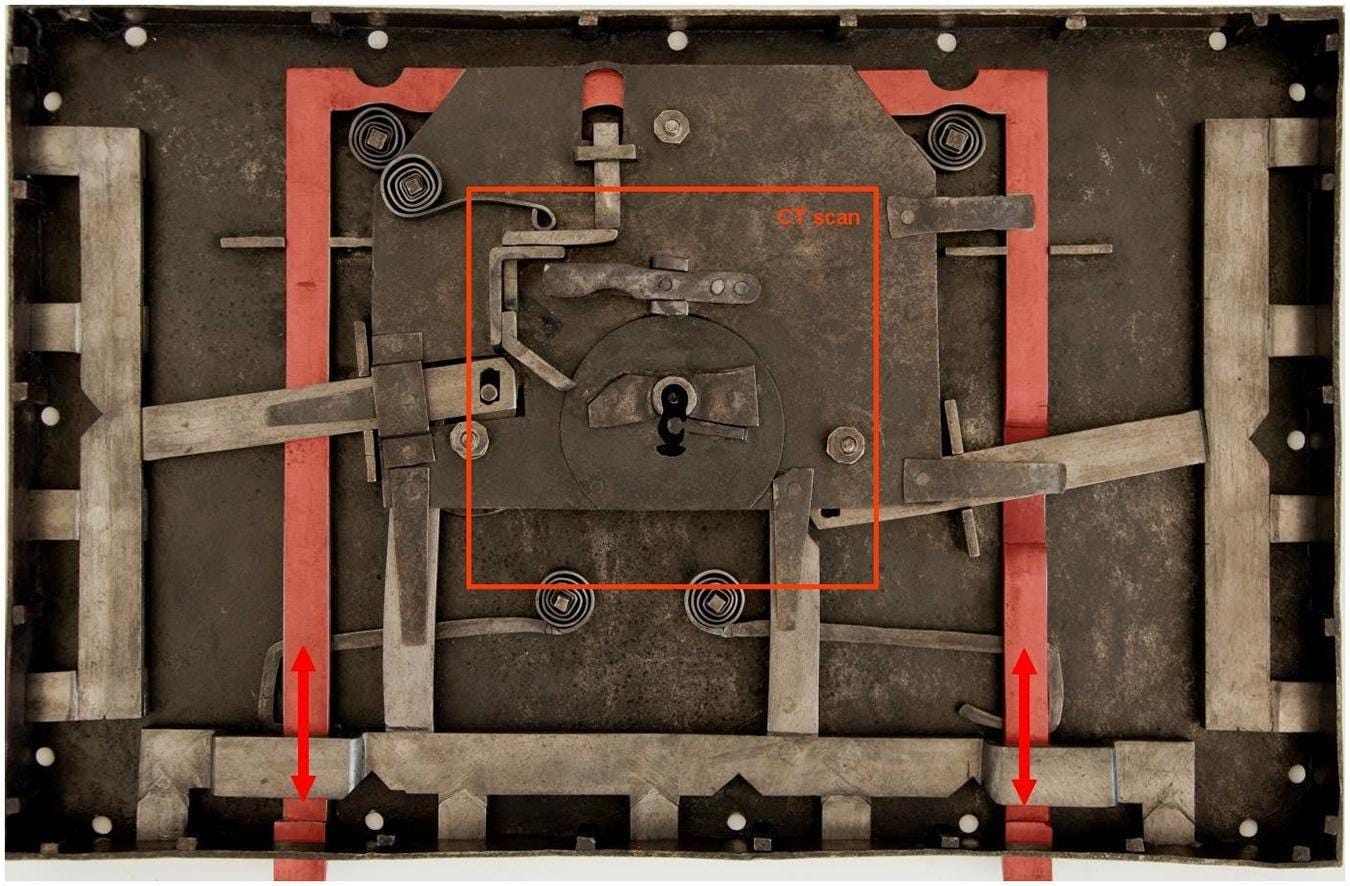
So, rather than sacrifice one piece of history to uncover another, researchers used industrial X-ray computed tomography to see what was happening inside.
The scans revealed a surprisingly elaborate lock hidden within the lid: a system of levers and bolts accompanied by two additional protective mechanisms. But they also revealed something nobody expected.
The chest wasn’t locked.
A misplaced spring in one of its secondary mechanisms had jammed the system, preventing the lid from opening.
Measurements ultimately allowed them to manufacture a replacement key and open the chest without causing further damage.
And what priceless historical treasure was waiting inside?
Nothing.
Well…almost nothing.
Lying inside was the missing spring from the lock mechanism.
The lock itself turned out to be the treasure.
Lock, Paper, Secrets
An important letter might pass through the hands of couriers, messengers, servants and countless others before ever reaching its intended recipient. So writers developed intricate methods of folding, cutting, tucking, threading and sealing the paper itself—a practice researchers today call letterlocking.
The letter became its own security system.
Some methods involved folding corners into one another. Others used slits cut directly into the page, paper tabs threaded through openings, string, or wax. More elaborate techniques were designed so that getting to the words inside meant irreversibly damaging the mechanism that protected them.
In modern locksmith terms, it was essentially tamper-evident access control made out of paper.
If somebody got in, they could read the message—but they couldn’t necessarily hide the fact that the contents had been compromised.
Over centuries, countless variations developed, with different levels of complexity and security depending on who was writing, who was receiving, and just how badly they wanted everyone else kept out.
Hours before her execution in 1587, Mary, Queen of Scots, wrote a final letter to Henri III of France. She protected it using an extraordinarily elaborate form of letterlocking, folding and securing the paper into what researchers now call a spiral lock.
Centuries later, researchers associated with MIT’s letterlocking project reconstructed exactly how she did it. In 2025, that research culminated in the first major comprehensive history of letterlocking—giving a modern name and classification system to security techniques people had been using for centuries.
But reconstructing a letter that had already been opened presented one challenge.
What happens when you find one that hasn’t?
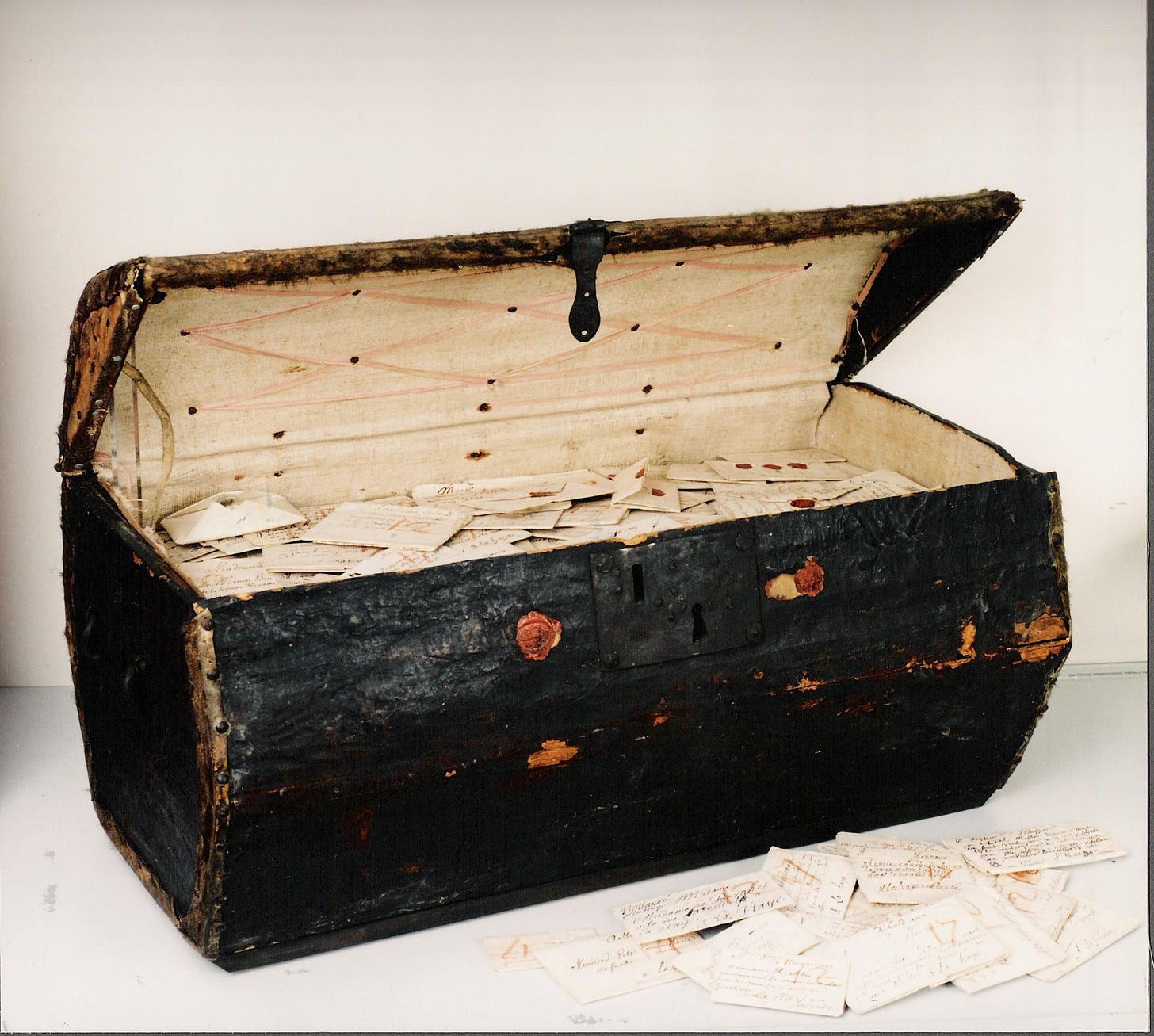
The Brienne Collection is a 17th-century European postmaster’s trunk containing thousands of letters that, for one reason or another, never reached their destinations. Among them are 577 letterlocked packets that remained unopened for roughly 300 years.
Opening one would reveal the words inside. However, It would also destroy part of the very locking mechanism researchers wanted to study.
So they didn’t open them.
Using X-ray microtomography and computational techniques, researchers were able to scan the sealed packets and virtually unfold the paper—revealing writing hidden inside without physically breaking the locks that had protected it for centuries.
The Cost of Entry
Sometimes, the only thing standing between you and what’s inside is the fact that opening it would destroy it.
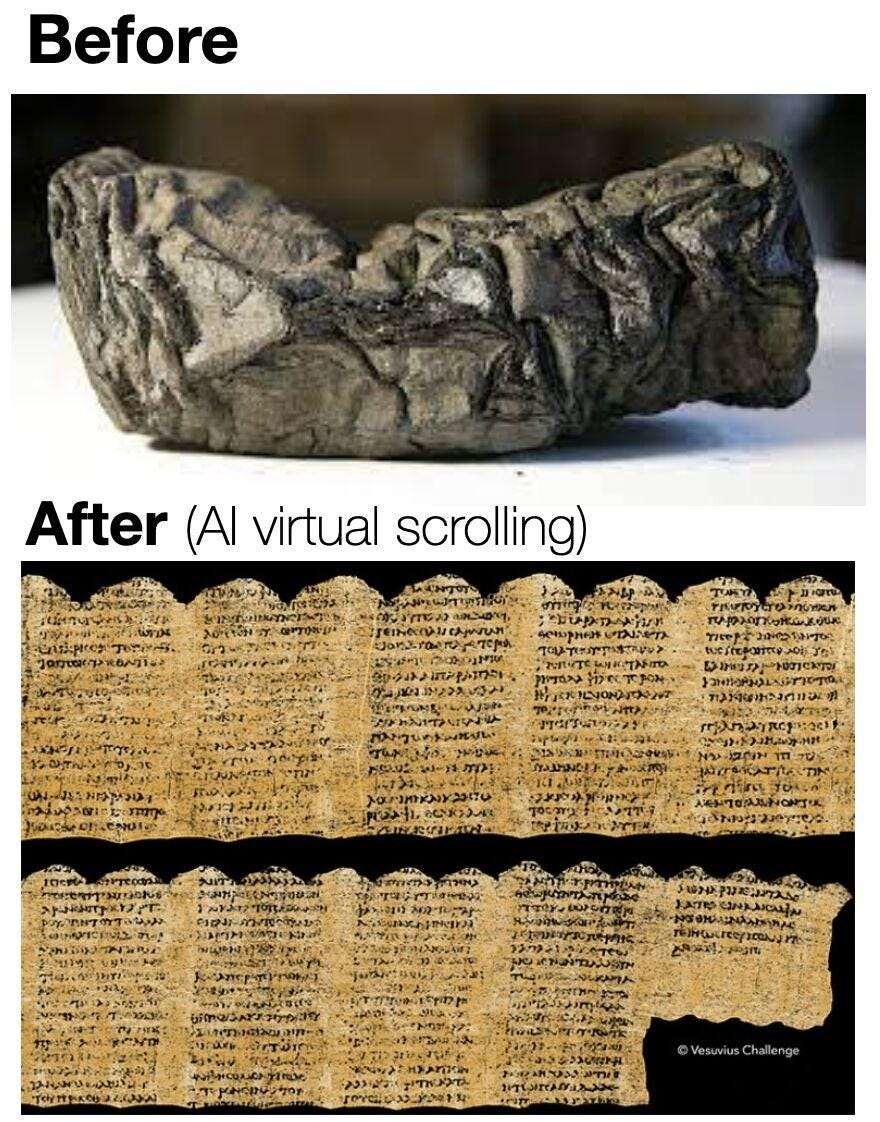
AD 79—The eruption of Mt. Vesuvius carbonized the papyrus scrolls at Herculaneum, simultaneously preserving them for nearly two thousand years and rendering them virtually unreadable.
The problem was getting inside. These scrolls had become so brittle that attempting to physically unroll them could cause them to crack, crumble and fall apart—and throughout history, attempts to do exactly that damaged or destroyed portions of the collection.
More than 600, however, remained unopened.
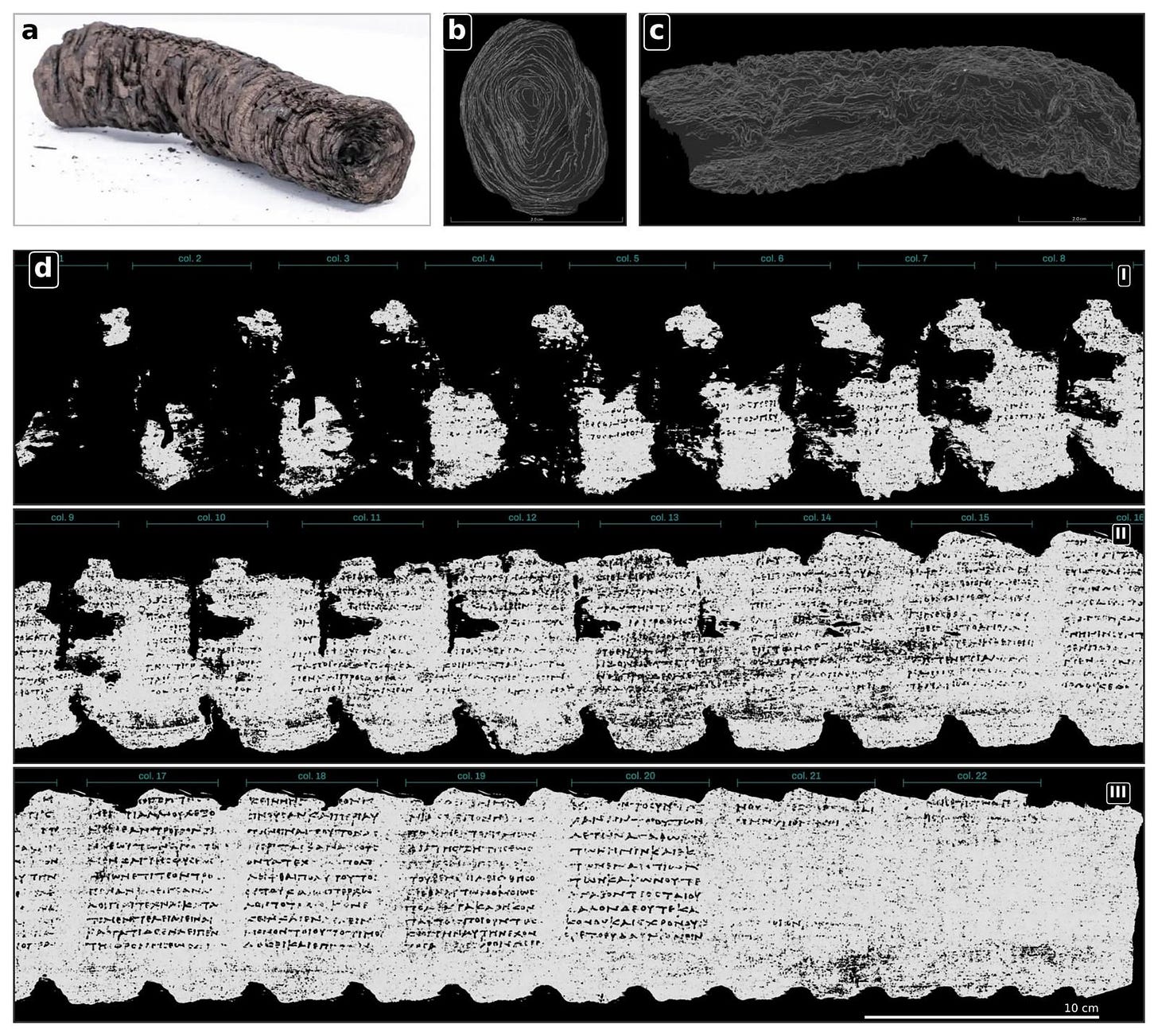
Thanks to a combination of X-ray tomography, geometry and computerized processes, researchers with the Vesuvius Challenge began scanning these delicate relics in 2023, virtually peeling back their layers without physically touching them.
In 2026, the first Herculaneum scroll was virtually unwrapped and read from beginning to end without ever being physically opened.
Often, the key to successfully unlocking something isn’t force—it’s mastering the art of non-destructive entry.
Rome Wasn’t Unlocked in a Day
Oplontis B, a Roman site near Pompeii, was also buried by the eruption of Mt. Vesuvius in AD 79. There, archaeologists discovered an elaborate strongbox believed to have been used to protect money or important records.
At first glance, much of the front of the chest simply looked decorative. There was a woman’s face, a lion’s head, a cupid and other ornate details.
But some of the decorations served a second purpose.
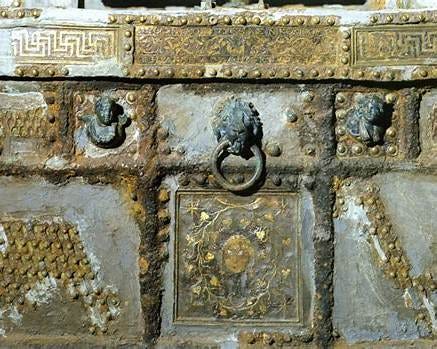
The woman’s portrait actually covered the keyhole, and getting the chest open involved more than simply inserting a key. The person opening it also had to know which decorative pieces to move—including pulling the lion’s head and turning the cupid’s head to operate bolts hidden inside.
Having the key was only part of the secret—you also had to know what to do with it.
It’s an idea that would sound perfectly at home in modern security: hide how the system works, and add layers of protection beyond simply holding the key.
The technology may have changed considerably in 2,000 years, but the idea of keeping the wrong person out really hasn’t.
Maybe We Should’ve Left This One Locked
Naturally, everyone wanted to know what was inside.
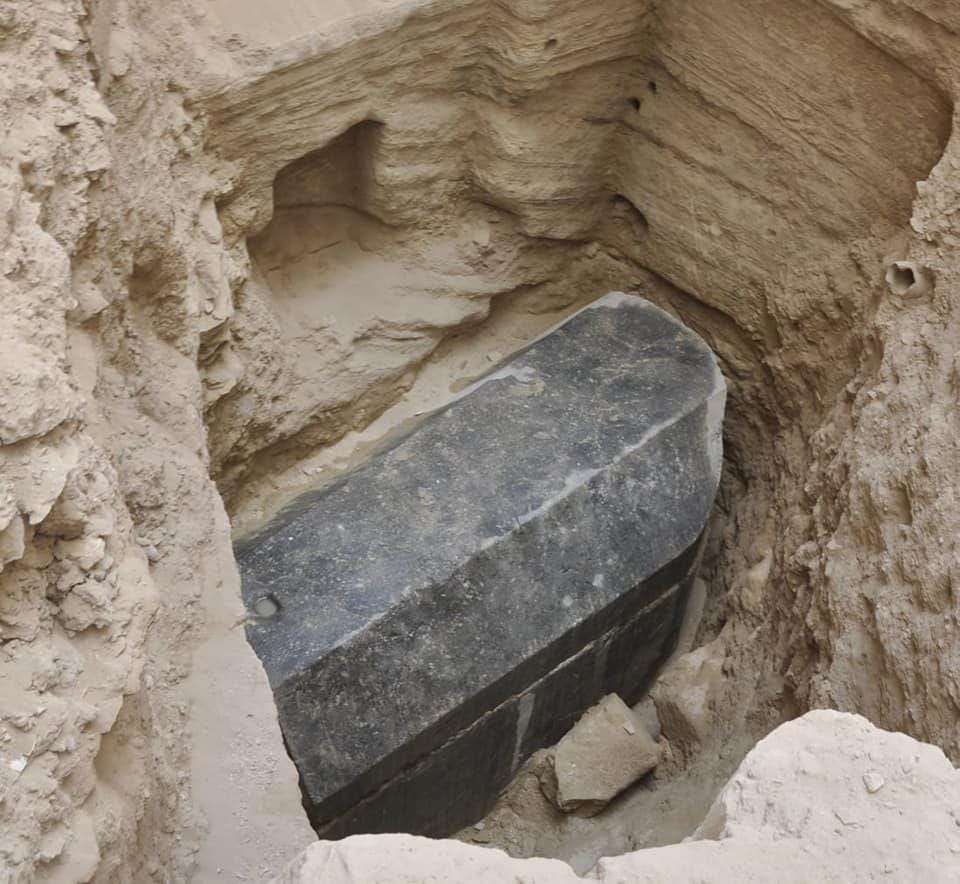
The internet did what the internet does. Speculation ran wild. Was it someone important? Could it somehow be the lost tomb of Alexander the Great? Was it cursed? Perhaps most importantly: should we really be opening the giant mysterious black coffin that had managed to stay closed for two millennia?
Humans: “Of course we should!”
Archaeologists eventually lifted the lid and discovered...
Three skeletons floating in reddish-brown sewage water that had leaked into the sarcophagus.
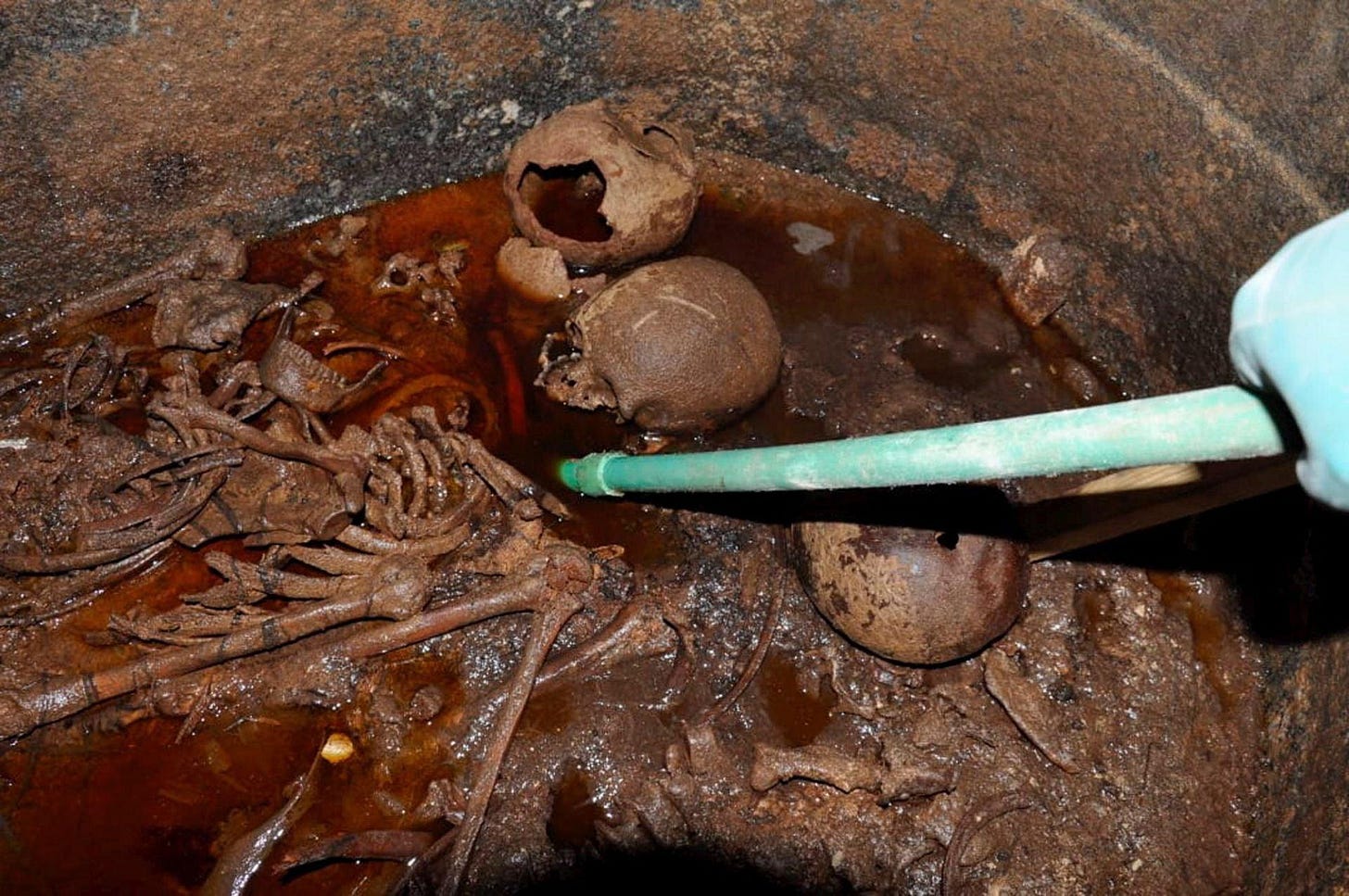
No Alexander the Great. No ancient super-mummy. Despite considerable concern from the internet, no curse appears to have been unleashed…that we know of.
Egypt’s Secretary-General of the Supreme Council of Antiquities even reassured reporters afterward that they had opened it and the world had not fallen into darkness.
Sometimes the mystery really is better than the answer.
But perhaps the most interesting part of this story is that, after everything we’ve learned about preserving the things history has kept closed, our first instinct remains remarkably unchanged:
We still want to know what’s inside and we will always find a way in.
—Ryan Barbin, AKS
