What IKEA Can Teach Locksmiths: How The Tools We Use Shape The Value Customers See
Posted by Ryan Barbin, AKS on Oct 20th 2026
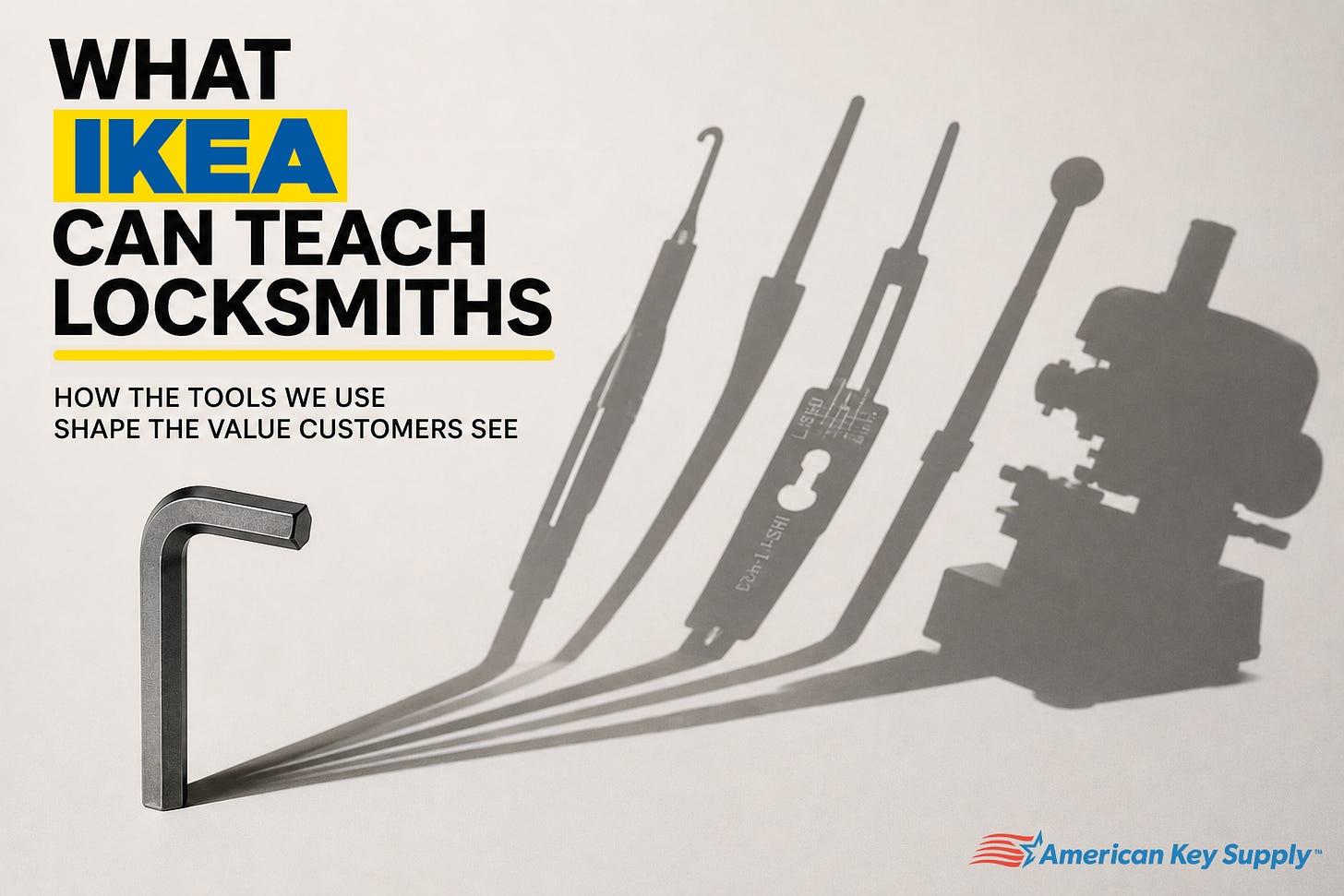
Walk through IKEA long enough and you’ll eventually encounter two things:
A tiny Allen wrench, and a dangerous amount of confidence.
Somewhere between assembling your first bookshelf and your third trip back to the parts counter because Shelf B somehow became Shelf D, a curious thing begins to happen.
You start believing you’re pretty handy—Maybe handier than you actually are.
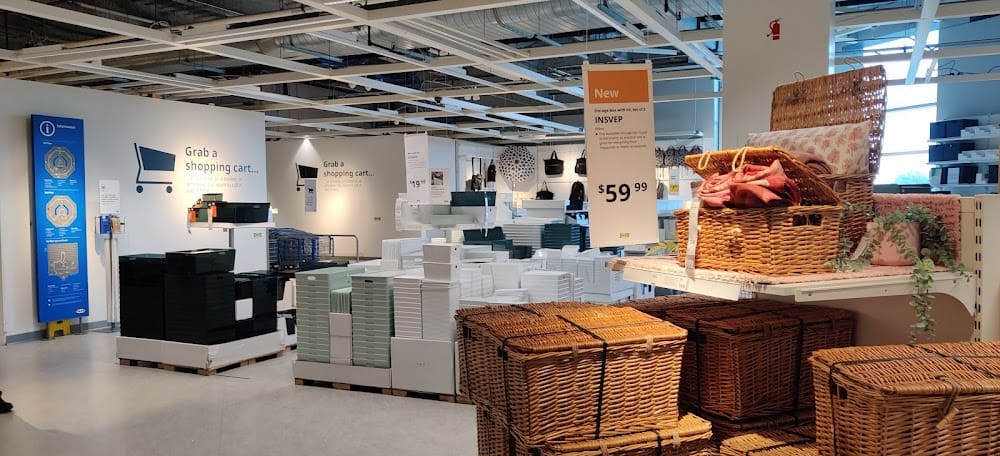
Psychologists have spent years studying this phenomenon. Why do people place such a high value on things they’ve built themselves? Why does participating in a process make us feel more capable, more invested, and sometimes more knowledgeable than we really are?
As it turns out, the answer may help explain everything from furniture assembly and home improvement projects to a locked Honda Accord sitting in a grocery store parking lot.
Perhaps more importantly, it may explain why the tools locksmiths use can dramatically influence how customers perceive the value of their expertise.
Some Assembly Required
The term was coined in 2011 by researchers Michael I. Norton, Daniel Mochon, and Dan Ariely. The concept highlights how investing physical or mental effort into a project can generate feelings of competence, confidence, and personal ownership. It was named after the Swedish furniture retailer based on the DIY characteristics of their business model, in regards to selling products with some assembly required.

As it turns out, this structure created success for the brand, due to the benefit of the human psyche and its desire for purpose, personal achievement, and ownership. Though IKEA isn’t the only brand that found success using this phenomenon. Its presence and value are used in a vast variety of industries, businesses, marketing strategies and product positioning.
“It’s Shake ‘N Bake, and I helped!”
This iconic line from a 1970’s Kraft marketing campaign helped popularize the convenience food, deep-frying alternative. Thus, Shake ‘N Bake made its way to the homes and dinner tables of millions of Americans for decades—and it’s still available today. The success of this campaign, especially in its early years, is largely accredited to the “…and I helped” catchphrase in the commercial, that had both children and adults quoting it for years. However, this wasn’t simply good marketing—it was psychologically brilliant!
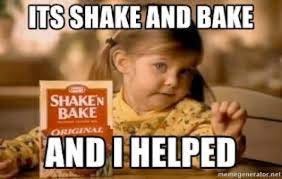
The reason this campaign worked so well is that it allowed children to feel like they contributed to making dinner without actually handling raw meat or requiring cooking skills. This element sparked a feeling of involvement, achievement, and participation, that in turn creates a feeling of ownership over the project of cooking dinner. So, in a fascinating way, Mom, Dad, and the kids are now all in on the fun and the marketing success of the Shake ‘N Bake brand.
The customers are essentially now invested affiliates and brand ambassadors of the company. A higher value is now perceived through the effect of inclusion. Years later we would call this—the IKEA Effect.
The IKEA Effect doesn’t just influence how people value products they help create. It also influences how people perceive expertise. The more familiar a process appears, the more likely people are to believe they understand it. And sometimes, that belief can dramatically change how they value the professional performing the work.

From Allen Wrenches to Slim Jims
Sure, their life-sized playhouse showroom experience, endless selection of home goods, dining options, and signature Swedish meatballs all contribute to the brand's popularity. But the humble Allen wrench may be the most powerful weapon in IKEA's arsenal.
By designing products around common hardware and providing customers with a simple set of instructions and a familiar tool, IKEA empowers ordinary people to accomplish something they might otherwise leave to a professional.
IKEA arms its customers with an instruction manual and an Allen wrench, and sends them home to conquer the task of DIY. This instills its shoppers with confidence and a sense of capability, without the fear of fancy tools or the need to “know how”. It makes every buyer feel like an expert in furniture assembly, and that is the real success of their business model.

The customer doesn’t feel like they bought furniture. They feel like they built it. The Allen wrench becomes a mighty sword. The instruction booklet becomes a battle plan, and the customer becomes the conquering hero of their own living room.
That’s the real genius of IKEA. They aren’t just selling furniture—they’re selling accomplishment.
Locksmithing presents a fascinating example of this phenomenon. The tools we use have a remarkable ability to shape customer confidence—sometimes in ways that help our businesses, and sometimes in ways that work against them.
Different Tools, Same Psychology
To the locksmith, these tools represented knowledge, practice, and experience. To the customer, they represented mystery.
A technician would arrive, slip a tool into a narrow gap, disappear beneath the window line, and moments later the door would unlock. The customer couldn’t see what was happening inside the door. More importantly, they couldn’t imagine doing it themselves.
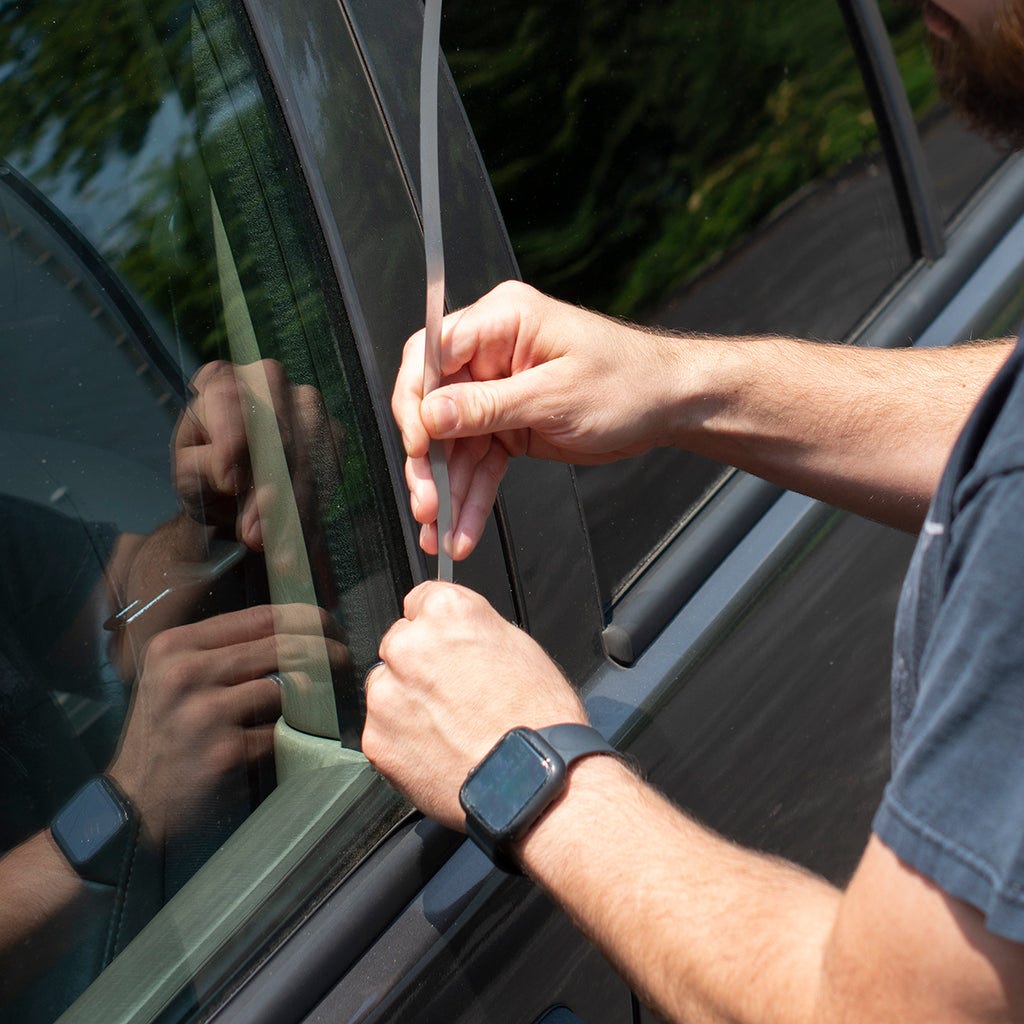
“When I use a rod to go into the door and open the door, customers thought I was a magician. They certainly didn’t think they would be able to do that themselves. The next time it happened again, they’d definitely be calling me again.”
—Cary Stevens, AKS President and former Pop-A-Lock Owner
Whether they understood the mechanics or not was irrelevant. What mattered was the perception of expertise. The locksmith possessed specialized knowledge that the customer did not. That distinction carried value.
Then the industry changed…
Around the turn of the century, long reach tool kits began transforming the lockout business. They were faster, safer, easier to learn, and significantly reduced the chances of damaging a vehicle during entry.
Customers began arriving at a different conclusion: “Oh, that’s easy. I could do that.”
For the first time, customers could watch nearly the entire process unfold:
-
Inflate the air wedge.
-
Insert the tool.
-
Press the button.
-
Door unlocked.
The locksmith’s skill hadn’t disappeared. The customer simply became more familiar with the process. Unfortunately, familiarity has a funny way of creating confidence.
Many customers began to believe that if they had access to the same tools, they could have opened the vehicle themselves. Some started trying—and damage often ensued. Others became more willing to call the cheapest option available—or even rely on a tow truck driver—because the task no longer appeared mysterious or highly specialized. Still, others are opting to purchase cheaper car door unlocking kits made in China from TikTok or Amazon.
The same psychology that helped IKEA build an empire was now quietly working against locksmiths. The Allen wrench convinced customers they could build furniture. The long reach tool convinced customers they could open cars.
In a way, locksmithing had stumbled into what might be called a Reverse IKEA Effect.
Missing Pieces
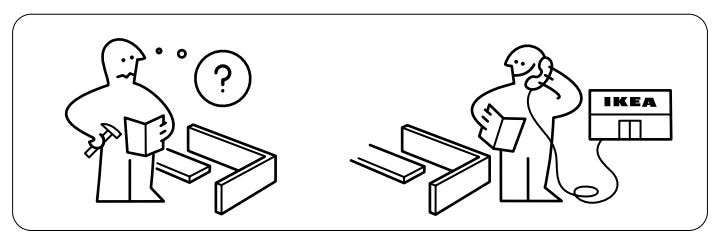
The result was the same confidence—but a very different business outcome.
When customers believe they could have done the job themselves, they naturally place less value on the expertise required to perform it. They become more likely to question the price, negotiate for discounts, or shop solely on cost.
After all, if the task appears simple, why pay a premium?
Ironically, the opposite often occurs when a locksmith arrives with a specialized tool that looks unfamiliar or highly technical. Customers immediately recognize that they’re watching a professional perform a skill they don’t possess.
The tool was never the valuable part. Anyone can buy an Allen wrench. Few people can assemble a wardrobe without the instructions.
The same principle applies to locksmithing.
The value isn’t found in the tool itself. The value is found in the knowledge required to use it successfully.
“I think this might be why locksmiths are starting to use Lishi tools to open car doors now. It brings the magic back to the job. Takes a little training and an investment in the tools, but most automotive locksmiths that make car keys already have the Lishi tools, and with some practice, they can open those car doors fairly quickly... and now they look like magicians to their customers all over again!” —Cary Stevens, AKS President
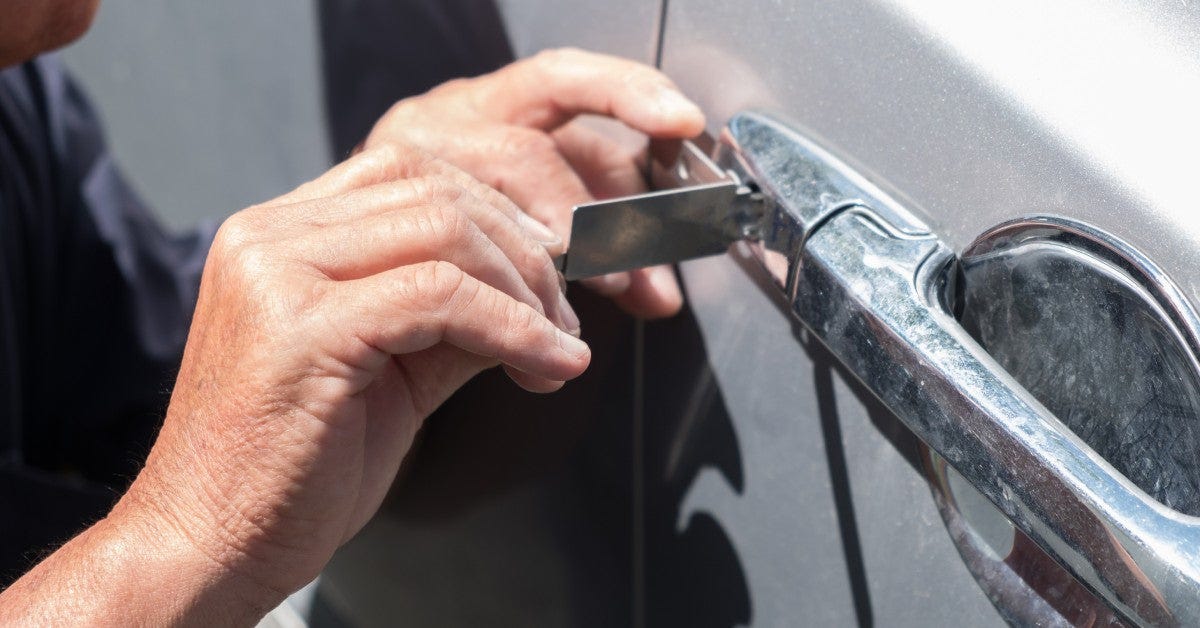
Aside from the simple loop, swoop, and pull of a long reach tool, Lishi tools require considerably more knowledge, training, and practice. Different vehicles require different tools, different techniques, and a deeper understanding of the lock itself. This helps put the value back in the hands of the professional.
Customers looked at the simplicity of the long reach tools like an Allen wrench at IKEA, but they didn’t realize the product had missing pieces…
Training, skill, knowledge, expertise—there is much more to locksmithing than merely pulling a handle from the inside. Lishi tools helped bring the magic back to locksmithing and reminded customers that without the instructions, the tool is just a piece of metal.
The work hasn’t changed. The perceived value has.
The Right Tools, In The Right Hands
The Allen wrench is not the key.
Participation is.
Consider the success of Shake ‘N Bake. Children weren’t actually cooking dinner. They weren’t slicing the meat, managing food safety, or operating the oven. Yet the simple act of shaking a bag allowed them to feel involved in the process.
The result wasn’t overconfidence—It was ownership.
Locksmiths can apply the same principle. Instead of allowing customers to become spectators, look for opportunities to make them participants:
Explain what you’re doing.
Show them how a key is programmed.
Let them compare a worn key to a newly cut one.
Walk them through the security features of a modern vehicle.
Demonstrate how a Lishi tool works without revealing how it’s done.
Perhaps the simplest application of the IKEA Effect is involvement. On a late-night lockout, that might be as simple as having the customer hold a flashlight while you work your LISHI magic. Not because you need the help—but because people value what they participate in.
Much like a father teaching a youngster to restore a 1968 Chevy Camaro, the goal isn’t to hand over the job. It’s to share the experience. The customer may not understand every detail of what you’re doing, but they’ll walk away feeling connected to the solution rather than merely watching it happen.
When customers gain insight into the process, they begin to appreciate the expertise behind it. The goal isn’t to convince customers they could do the work themselves. The goal is to help them understand why they can’t.
That distinction is important.
The most successful brands don’t simply sell products. They create participation.
IKEA lets customers build furniture. Shake ‘N Bake lets kids help make dinner.
The best locksmiths allow customers to experience the value of the service without diminishing the expertise required to provide it.
Don't Forget the Meatballs

IKEA didn’t become a global powerhouse because of an Allen wrench. The Allen wrench helped customers participate. The meatballs made them want to come back.
Who expected to go to a furniture store for lunch? Nobody!
The IKEA Effect shows us that people perceive greater value when they participate in creating something. The meatballs add another layer to the equation: people also remember and value experiences they didn't expect.
Locksmiths often focus on the technical side of the job:
-
Opening the door.
-
Cutting the key.
-
Programming the remote.
That’s the Allen wrench.
The question is:
What’s the meatball?
A locksmith who:
-
Explains what they’re doing
-
Educates the customer
-
Shows the worn key vs the new key
-
Lets the customer witness the LISHI working
-
Explains how modern vehicle security functions
is creating “the meatballs.”
The memorable part. The story.
Those things don’t unlock the car. They create the experience. Nobody tells their friends about the Allen wrench. They tell stories about the experience.
The same is true in locksmithing. Customers rarely remember the exact tool that was used. They remember the locksmith who took time to explain the problem, answer questions, and help them understand what happened.
Shake ‘N Bake lets customers participate. IKEA lets customers participate. Great locksmiths do the same thing. They don’t simply unlock a car. They make the customer feel involved in the solution.
The Allen wrench created participation. The meatballs created experience.
Great locksmiths create both.
—Ryan Barbin, AKS
